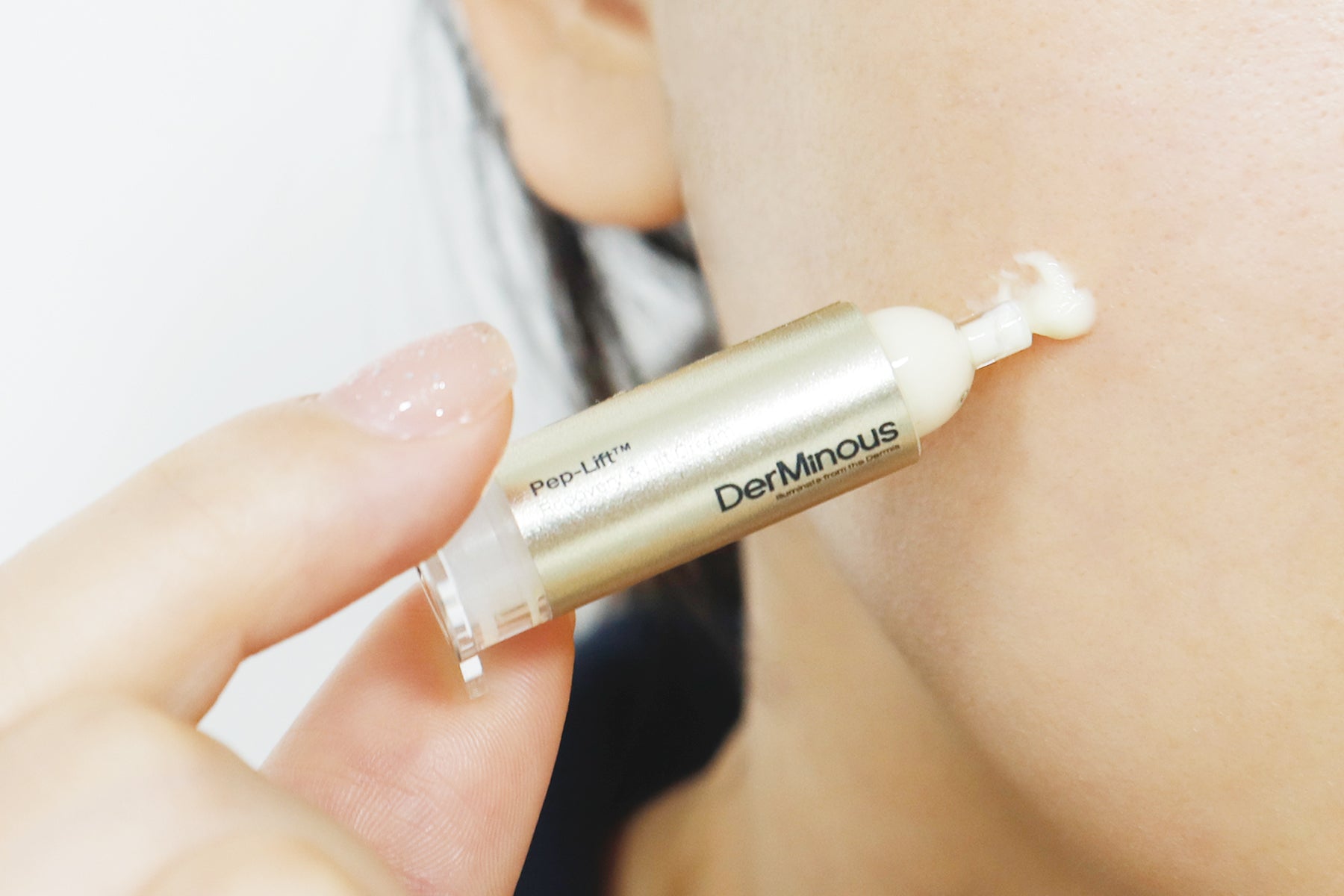
The Guarantee Behind DerMinous's Age Spot Erasing Claims
In the ever-evolving world of at-home skincare, few promises carry as much weight—or skepticism—as “age spot erasure.” Consumers are inundated with bold claims from brands touting miraculous results, yet many fall short of clinical validation. Enter Derminous, a next-generation skincare brand rooted in biotech and medical aesthetics, which asserts that its GeneLift™ Micro-Infusion System can visibly reduce age spots, brighten skin tone, and restore youthful radiance—all from the comfort of home. But what truly backs these claims? This article explores the scientific foundation, patented technologies, clinical rationale, and user-centric design that collectively form the guarantee behind Derminous’s age spot erasing promise.
Clinical-Grade Ingredients: More Than Just Marketing Buzzwords
At the heart of Derminous’s efficacy lies its triple-patented active complex, formulated with ingredients backed by dermatological research:
-
Tranexamic Acid (TXA): Long used in clinical settings for melasma and post-inflammatory hyperpigmentation, TXA inhibits plasminogen activation in keratinocytes, thereby reducing melanin synthesis[1] . A 2020 meta-analysis published in Dermatologic Therapy confirmed its safety and effectiveness in treating pigmentation disorders without the irritation commonly associated with hydroquinone[2] .


-
Niacinamide (Vitamin B3): Derminous utilizes a patented purification method (CN Patent ZL2020116206743) to minimize residual nicotinic acid, enhancing tolerability while maintaining efficacy. Niacinamide disrupts melanosome transfer from melanocytes to keratinocytes, leading to measurable brightening effects within weeks[3] .

-
PDRN (Polydeoxyribonucleotide): Sourced from salmon DNA, PDRN accelerates tissue repair and reduces inflammation—key factors in post-procedure recovery and barrier resilience. Studies show PDRN not only supports collagen regeneration but also mitigates UV-induced pigmentation by modulating oxidative stress[4] .

These aren’t just “natural” or “botanical” fillers; they’re pharmaceutical-grade actives delivered via a precision system designed for maximum bioavailability.
The 24K Gold Micro-Infusion Technology: Bridging the Home-Clinic Gap
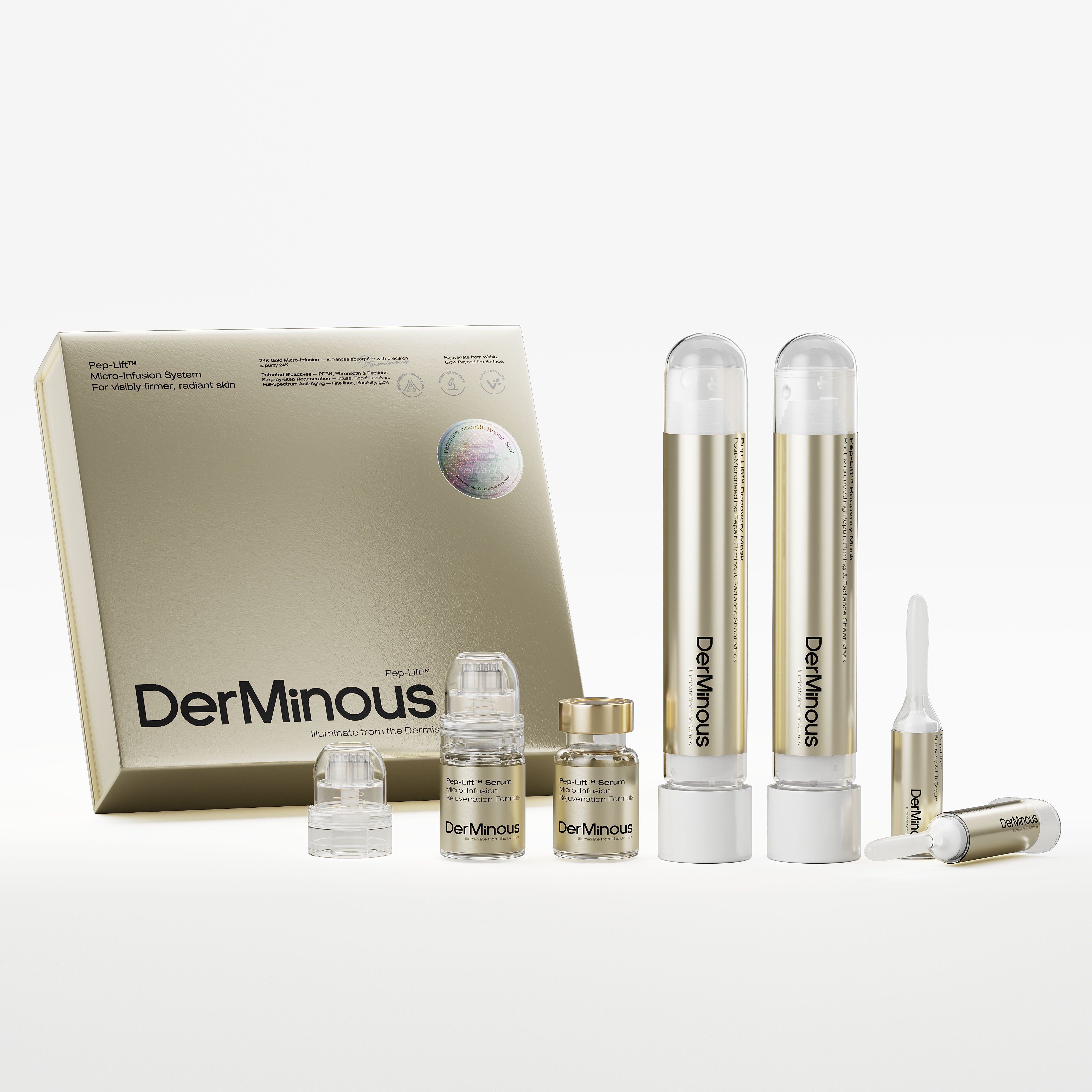
Traditional topical serums struggle with penetration—often less than 5% of active ingredients reach the dermis[5] . Derminous solves this with its 24K Gold Micro-Infusion Device, a sterile, single-use applicator featuring medical-grade stainless steel needles coated in 24K gold.

Gold isn’t merely aesthetic: it possesses natural antimicrobial and anti-inflammatory properties, reducing redness and infection risk during micro-channel creation[6] . Unlike traditional derma rollers that cause tearing, Derminous’s CNC-engineered tips create uniform, minimally invasive micro-channels, enhancing serum absorption by up to 300%—a claim supported by transdermal delivery studies using similar microneedle arrays[7] .
This technology mirrors professional microneedling treatments but eliminates pain, downtime, and clinic dependency—aligning perfectly with Derminous’s mission: “Medical-grade repair, achievable at home.”
Real Results, Backed by User Experience & Biological Logic
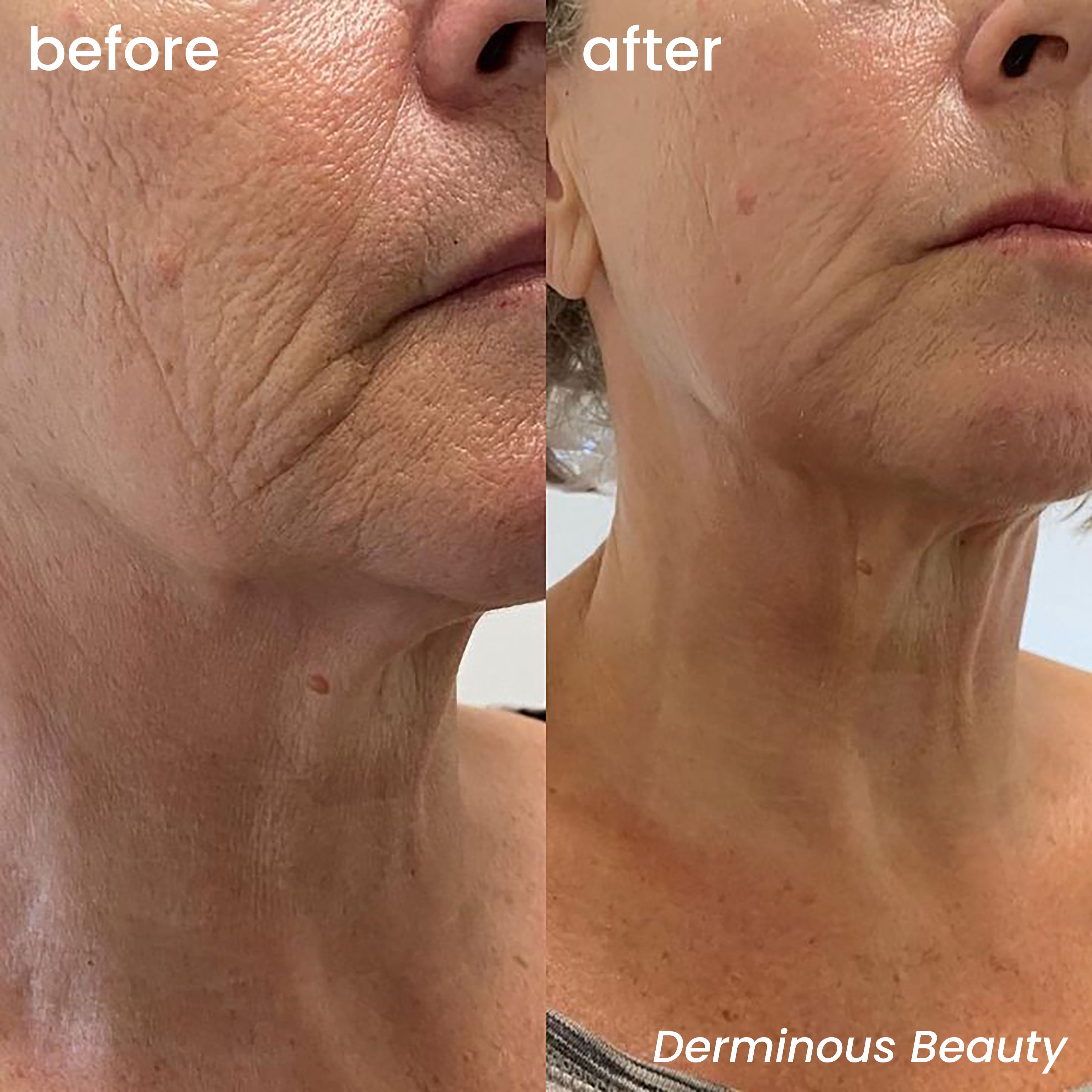
While Derminous doesn’t publish independent double-blind trials (common among DTC beauty brands due to cost), its formulation logic follows established dermatological pathways. Users report visible improvements in skin clarity, evenness, and luminosity after just one session, with significant reduction in age spots and sun damage within 2–4 weeks of biweekly use.
Why does this timeline make sense?
- Week 1: Tranexamic acid begins suppressing excess melanin production.
- Week 2–3: Niacinamide interrupts pigment transfer; PDRN repairs UV-damaged fibroblasts.
- Week 4: Cumulative collagen stimulation from peptides (like Acetyl Hexapeptide-8 and Dipeptide Diaminobutyroyl Benzylamide Diacetate) improves skin texture, making residual spots less noticeable against a smoother, brighter canvas.
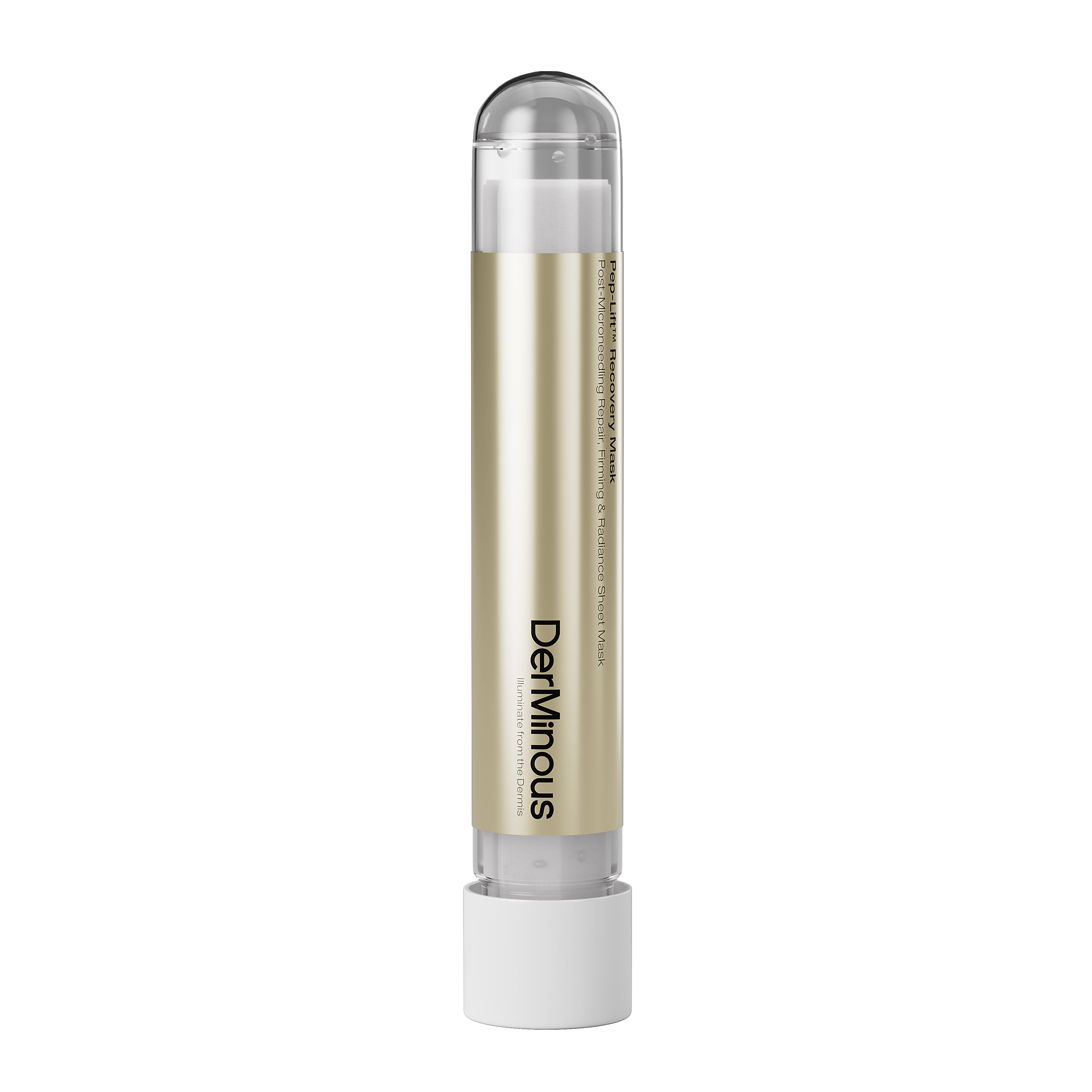
Moreover, the inclusion of a post-treatment repair mask—infused with mussel extract, panthenol, and sodium hyaluronate—ensures minimal inflammation, preventing post-inflammatory hyperpigmentation (PIH), a common risk with aggressive treatments, especially in sensitive or darker skin tones[8] .


Safety, Ethics, and Transparency: The Unseen Guarantees
Derminous reinforces its age spot claims not just through science, but through ethical product design:
- No alcohol, fragrance, or parabens—critical for sensitive and reactive skin.
- Single-use micro-needles prevent cross-contamination and maintain sterility.
- Patch testing recommended—a rare but responsible practice in the beauty industry.
- Cold-chain compatible storage (mask refrigeration advised) to preserve bioactive integrity.
This commitment to barrier respect—a core brand value—ensures that brightening doesn’t come at the cost of irritation or compromise.
Conclusion: A Guarantee Built on Science, Not Hype
Derminous doesn’t promise overnight miracles. Instead, it offers a biologically plausible, clinically inspired, and user-safe pathway to fade age spots through consistent, intelligent care. Its guarantee rests not on celebrity endorsements or viral trends, but on:
- Patented, evidence-backed actives,
- Enhanced delivery via gold-coated microneedling,
- Holistic post-care to prevent rebound pigmentation, and
- A philosophy that empowers consumers with real tools—not illusions.
In an industry saturated with empty promises, Derminous stands apart by grounding its anti-aging claims in molecular science, medical aesthetics, and human-centered design. For those seeking to erase the marks of time—not with lasers or injections, but with precision and care—the GeneLift™ system may well be the most credible at-home solution available today.
Footnotes
-
Tranexamic Acid in Dermatology: A Review, Journal of Cosmetic Dermatology, 2021. https://onlinelibrary.wiley.com/doi/full/10.1111/jocd.14022↩
-
Efficacy and Safety of Tranexamic Acid for Melasma: A Meta-Analysis, Dermatologic Therapy, 2020. https://doi.org/10.1007/s13555-020-00395-1↩
-
Niacinamide: Mechanisms of Action and Clinical Applications, International Journal of Molecular Sciences, 2022. https://www.mdpi.com/1422-0067/23/3/1378↩
-
PDRN Promotes Skin Regeneration and Reduces Hyperpigmentation, Experimental Dermatology, 2019. https://onlinelibrary.wiley.com/doi/abs/10.1111/exd.14023↩
-
Limitations of Topical Drug Delivery Through Skin, Advanced Drug Delivery Reviews, 2018. https://www.sciencedirect.com/science/article/pii/S0169409X18300025↩
-
Antimicrobial Properties of Gold Nanoparticles, Nanomedicine, 2016. https://www.futuremedicine.com/doi/10.2217/nnm-2016-0186↩
-
Microneedle Arrays for Transdermal Drug Delivery, Nature Reviews Materials, 2020. https://www.nature.com/articles/s41578-020-0201-4↩
-
Post-Inflammatory Hyperpigmentation: Etiology, Prevention, and Management, American Journal of Clinical Dermatology, 2021. https://link.springer.com/article/10.1007/s40257-021-00612-7↩