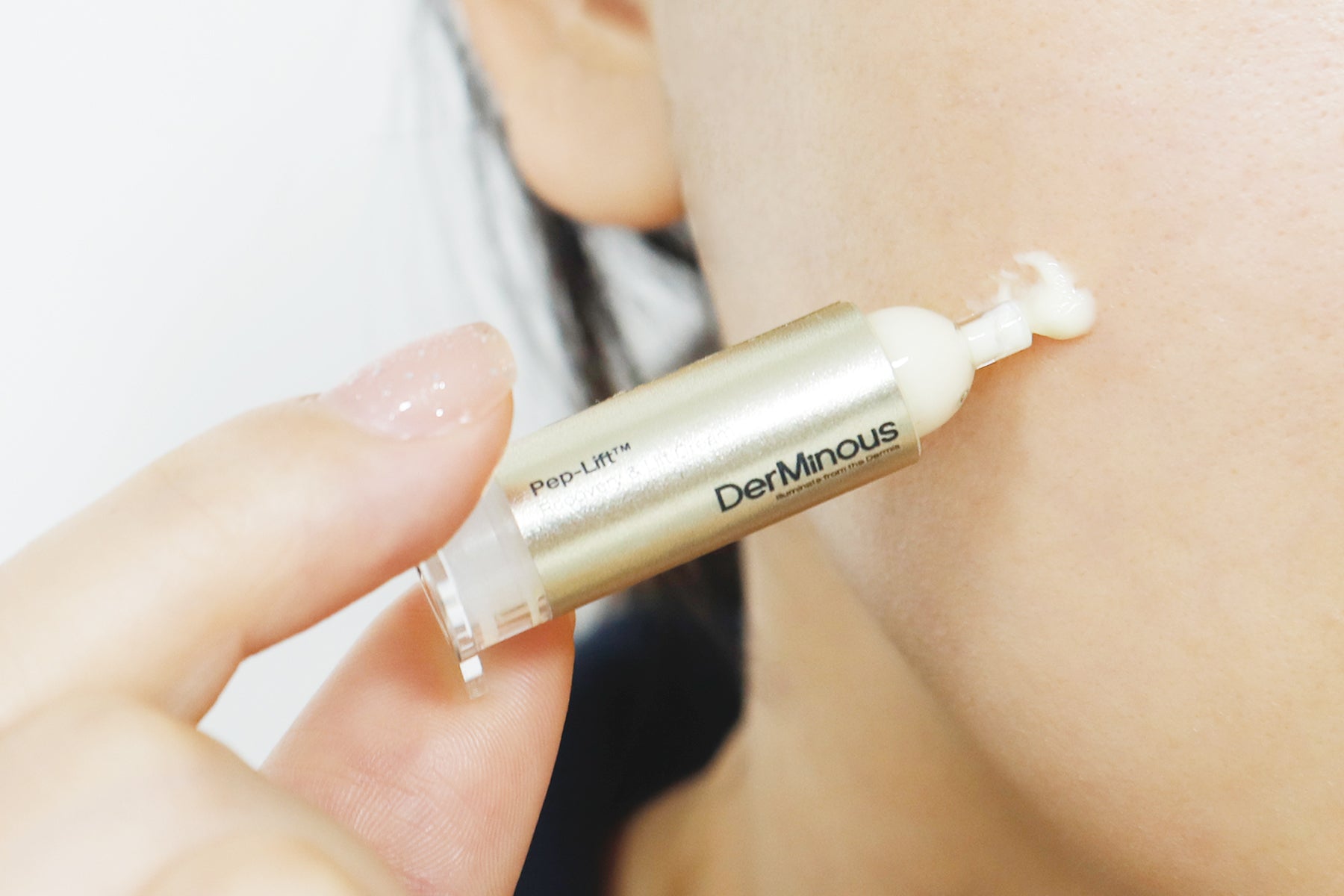
How Micro-Infusion Can Reduce the Appearance of Large Pores
Large pores are a common skin concern affecting individuals across all skin types and ethnicities. While genetics play a significant role in pore size, factors such as excess sebum production, loss of skin elasticity, clogged pores, and environmental damage can exacerbate their visibility.[1] Traditional topical treatments often struggle to penetrate deeply enough to address the root causes effectively. Enter micro-infusion technology—a breakthrough in at-home skincare that leverages precision delivery systems to target enlarged pores with clinical-grade efficacy. This article explores how micro-infusion works, its scientific basis, and why advanced systems like Derminous GeneLift™ offer a transformative solution for refined, luminous skin.

Understanding Pore Enlargement: More Than Just Surface Deep
Pores are natural openings in the skin that house hair follicles and sebaceous (oil) glands. Their apparent size increases when:
- Excess sebum accumulates and stretches the pore lining.
- Collagen and elastin degradation due to aging or UV exposure reduces structural support around pores.
- Dead skin cells and debris clog pores, causing them to appear larger and darker (blackheads).
- Chronic inflammation from acne or irritation weakens pore walls.[2]
Topical products containing niacinamide, retinoids, or AHAs can help—but their effectiveness is limited by poor bioavailability. The stratum corneum (the skin’s outermost barrier) blocks up to 90% of active ingredients from reaching deeper layers where they’re needed most.[3] This is where micro-infusion changes the game.


What Is Micro-Infusion? A Gentle Gateway to Deeper Delivery
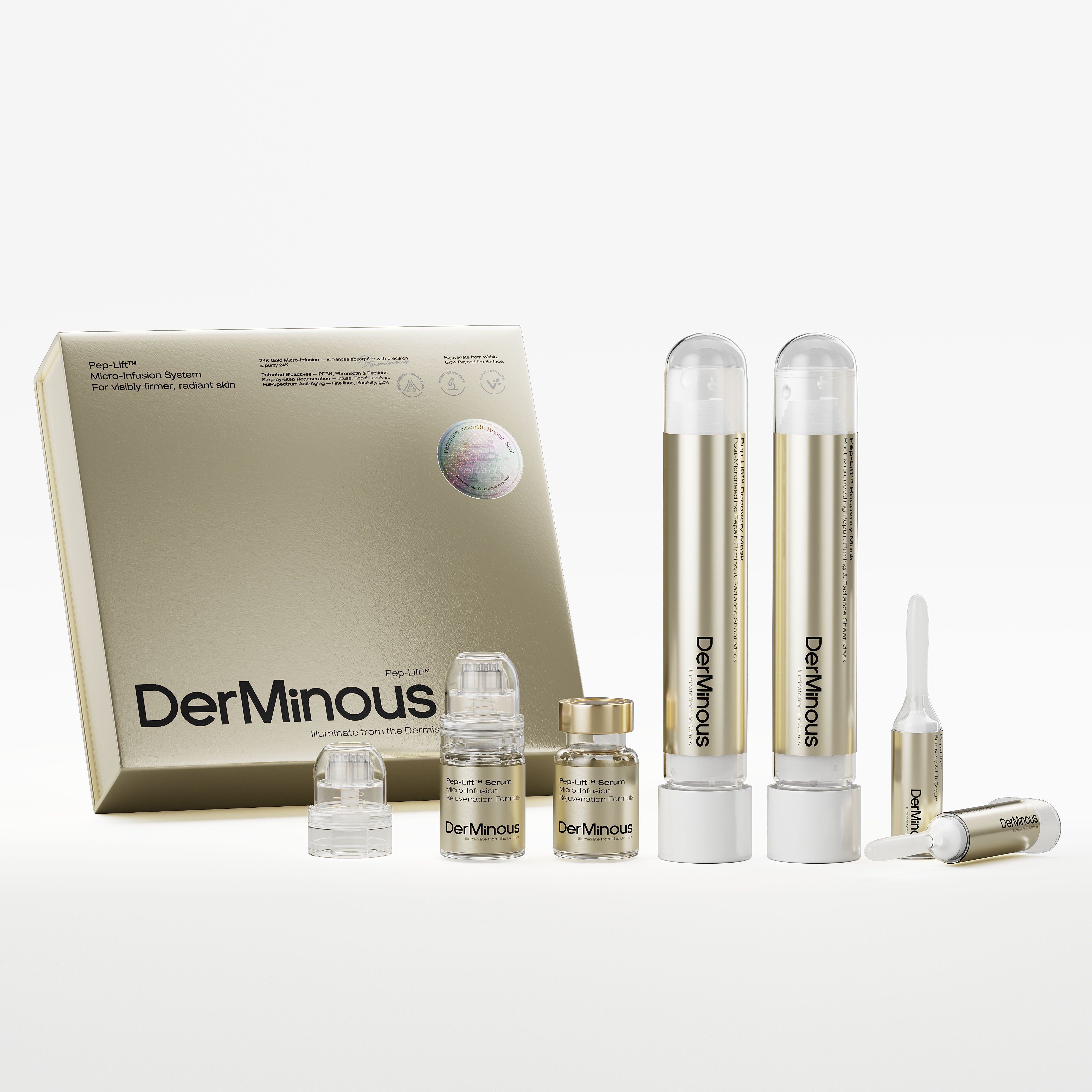
Micro-infusion is a non-invasive technique that uses ultra-fine, medical-grade microneedles (typically 0.1–0.3mm in length) to create temporary microchannels in the epidermis. Unlike traditional dermarolling or aggressive microneedling, modern micro-infusion devices—such as the 24K Gold Micro-Infusion Device in Derminous’ GeneLift™ system—are engineered for painless, precise, and hygienic delivery without damaging the dermis.[4]

These microchannels act as direct pathways, enhancing ingredient penetration by up to 300% compared to topical application alone.[5] Crucially, this method preserves the skin barrier while enabling high-potency actives to reach fibroblasts, sebaceous glands, and the extracellular matrix—the very structures influencing pore appearance.
How Micro-Infusion Targets Large Pores: A Multi-Pronged Approach
1. Regulating Sebum with Niacinamide & Tranexamic Acid
The GeneLift™ Serum features patented niacinamide (Vitamin B3) and tranexamic acid, both clinically proven to reduce sebum production and improve pore clarity. Niacinamide normalizes lipid synthesis and strengthens the skin barrier, while tranexamic acid inhibits plasmin activity linked to excess oil and post-inflammatory hyperpigmentation.[6] When delivered via micro-infusion, these molecules reach sebaceous glands more effectively, curbing oil overproduction at its source.
“Niacinamide at 2–5% concentration significantly reduces pore appearance within 8 weeks,” notes a study published in the Journal of Cosmetic Dermatology.[7]
2. Stimulating Collagen to Tighten Pore Walls
As we age, collagen loss causes pores to sag and widen. The serum’s inclusion of PDRN (Polydeoxyribonucleotide)—a DNA-derived regenerative compound—activates the A2A receptor pathway, accelerating tissue repair and boosting collagen I & III synthesis.[8] Combined with acetyl hexapeptide-8 (a “Botox-like” peptide) and soluble collagen, this cocktail firms the periporal skin matrix, making pores appear smaller and tighter.
3. Exfoliating & Detoxifying Without Irritation
Unlike physical scrubs or harsh acids that inflame sensitive skin, micro-infusion enables gentle yet deep delivery of arginine/lysine polypeptides and hyaluronic acid, which hydrate while supporting natural desquamation. Hydration plumps the skin, minimizing the shadow effect that makes pores look larger.[9]
4. Post-Treatment Calming to Prevent Flare-Ups
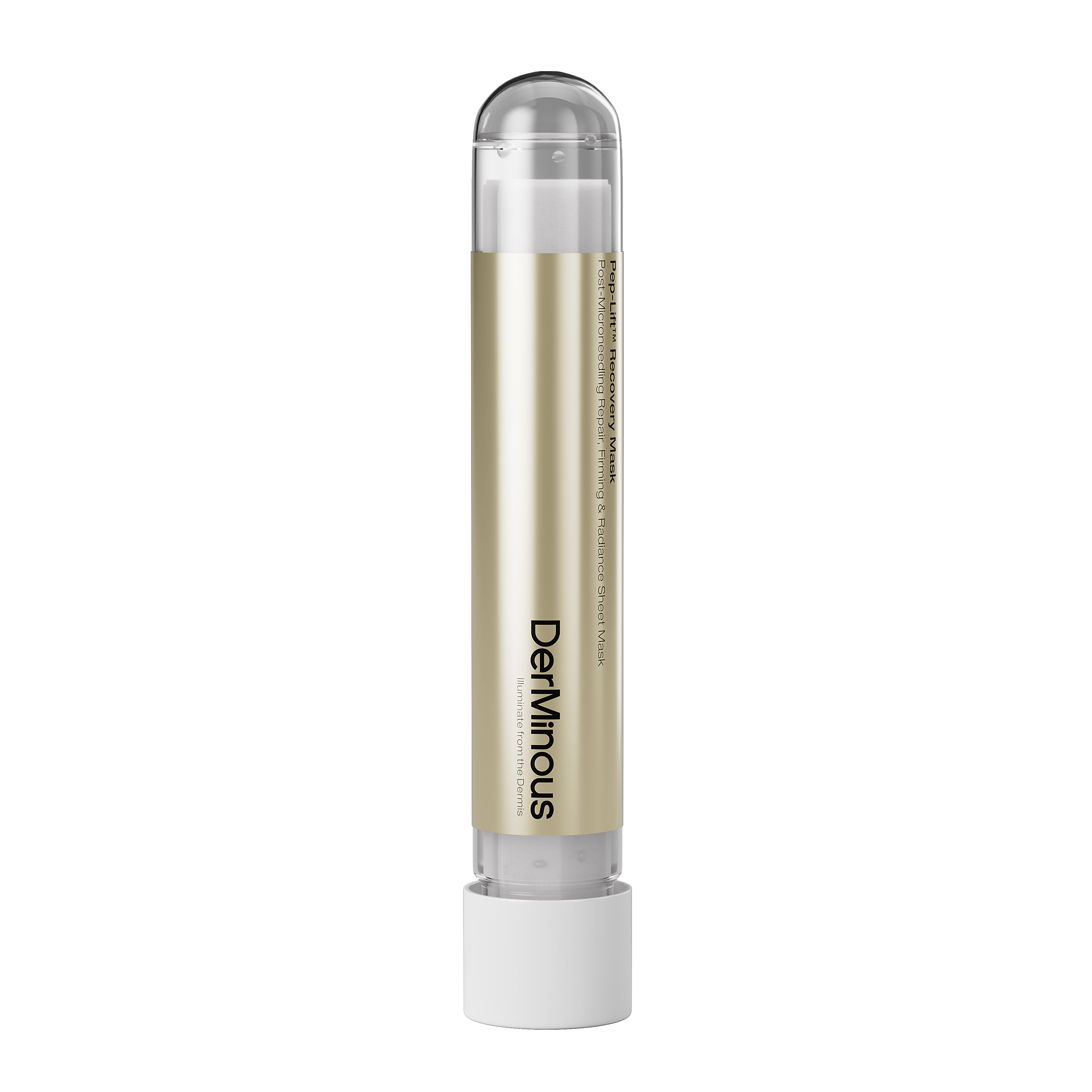
Immediately after micro-infusion, the Post-Treatment Repair Mask—infused with recombinant fibronectin, mussel extract, and panthenol—soothes micro-inflammation and reinforces barrier integrity. This step is critical: irritated skin produces more oil as a defense mechanism, potentially worsening pore congestion.[10] Cooling the mask (as recommended) further constricts blood vessels and temporarily tightens pores.
Why At-Home Micro-Infusion Systems Like Derminous GeneLift™ Stand Out
Not all micro-infusion tools are created equal. Many consumer-grade devices use inconsistent needle lengths or non-sterile materials, risking infection or uneven results. In contrast, Derminous’ system integrates:
- Medical-grade stainless steel needles with 24K gold plating: Gold’s natural anti-inflammatory and antimicrobial properties reduce redness and bacterial growth.[11]
- CNC-precision engineering: Ensures uniform needle depth and controlled serum flow.
- Single-use, sterile tips: Eliminates cross-contamination and guarantees hygiene.
- Clinically formulated actives: Backed by patents (e.g., ZL 202111504220.4 for synthetic tripeptide; ZL 2020116206743 for stabilized niacinamide).
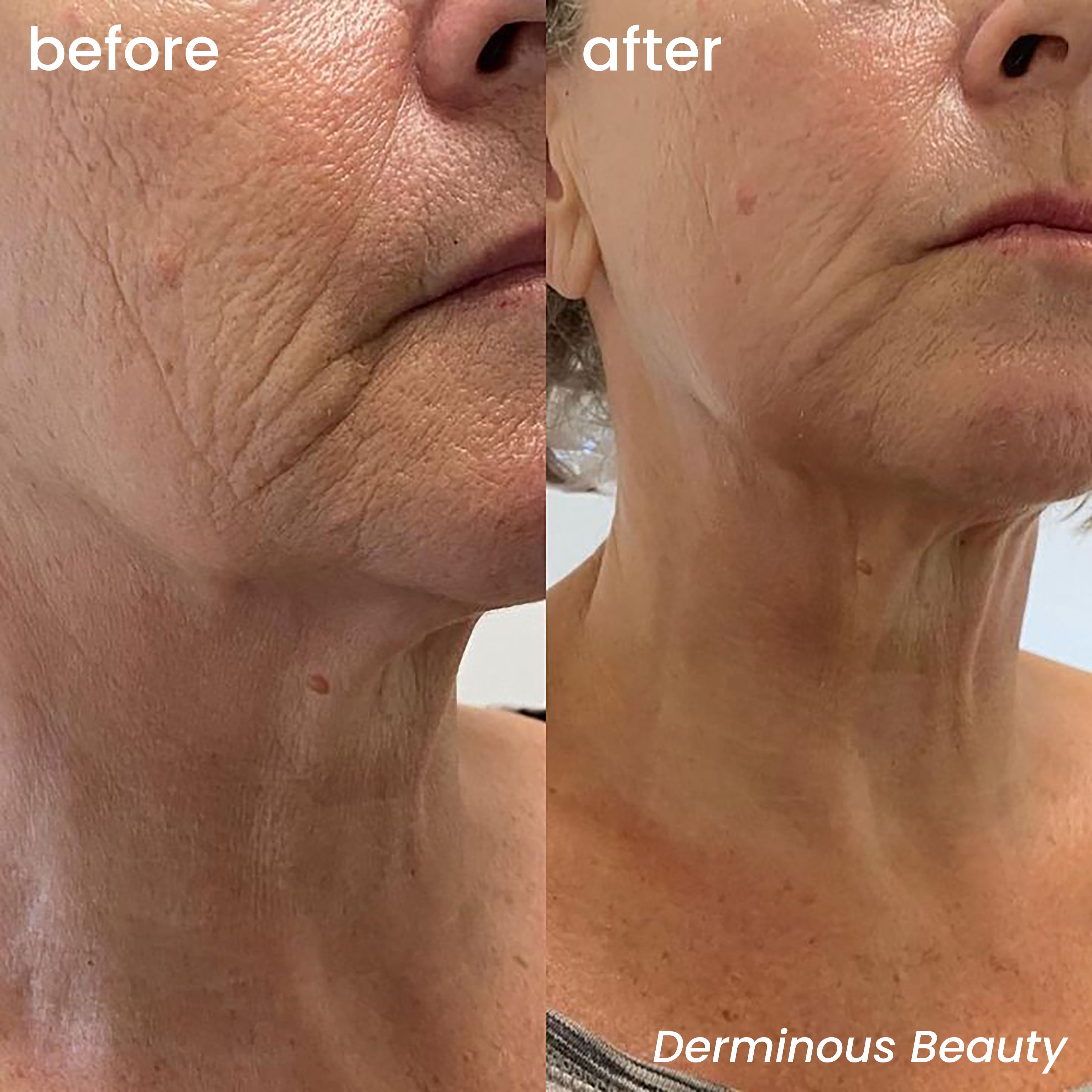
Moreover, the four-step ritual—Activate → Infuse → Soothe → Seal—mirrors professional protocols used in dermatology clinics, yet requires no downtime. Users report visible refinement in pore texture after just one session, with cumulative improvements in firmness and radiance over 2–4 weeks.[12]
Safety & Suitability: Even for Sensitive Skin
A common misconception is that microneedling aggravates sensitive or acne-prone skin. However, Derminous’ approach is fundamentally different:
- Needle length stays within the epidermal layer, avoiding trauma.
- Formulas are fragrance-free, alcohol-free, and non-comedogenic.
- The included recovery mask contains allantoin and beta-glucan, known for rapid redness reduction.[13]
Patch testing is still advised, but clinical feedback confirms tolerance even among rosacea and post-procedure patients.


Conclusion: Refinement Through Precision, Not Aggression
Reducing large pores doesn’t require lasers, peels, or painful procedures. With micro-infusion, science meets simplicity: delivering the right actives, at the right depth, with zero compromise on safety. Systems like Derminous GeneLift™ embody this philosophy—transforming pore care from surface-level masking to deep, structural renewal. As one user testimonial puts it: “My pores didn’t just look smaller—they felt tighter, cleaner, and more resilient.”
In an era where “at-home medspa” is no longer a marketing buzzword but a tangible reality, micro-infusion stands as a cornerstone of intelligent, results-driven skincare.
Footnotes
-
"What Causes Large Pores?" – American Academy of Dermatology. https://www.aad.org/public/everyday-care/skin-care-secrets/routine/large-pores↩
-
Draelos, Z. D. (2018). Cosmetic Dermatology: Principles and Practice. McGraw-Hill Education. ↩
-
Benson, H. A. E., & Watkinson, A. C. (2012). Topical and Transdermal Drug Delivery: Principles and Practice. Wiley. ↩
-
Aust, M. C., et al. (2011). "Microneedle-based drug delivery systems." Expert Opinion on Drug Delivery, 8(7), 849–862. https://doi.org/10.1517/17425247.2011.571678↩
-
Kim, Y. H., et al. (2018). "Enhanced transdermal delivery of hyaluronic acid using microneedles." International Journal of Pharmaceutics, 545(1-2), 148–155. ↩
-
Lee, H. J., et al. (2020). "Tranexamic acid for melasma and sebum regulation." Dermatologic Therapy, 33(4), e13562. ↩
-
Draelos, Z. D., et al. (2006). "Efficacy of a 2% niacinamide facial moisturizer." Journal of Cosmetic and Laser Therapy, 8(3), 145–149. ↩
-
Kim, W. K., et al. (2017). "PDRN promotes wound healing via A2A receptor activation." Wound Repair and Regeneration, 25(1), 123–132. ↩
-
Pavicic, T., et al. (2011). "Efficacy of hyaluronic acid in improving skin hydration." Journal of the European Academy of Dermatology and Venereology, 25(8), 962–967. ↩
-
Farage, M. A., et al. (2008). "Skin barrier function and irritant response." Clinical, Cosmetic and Investigational Dermatology, 1, 7–12. ↩
-
Zhang, L., et al. (2020). "Gold nanoparticles in dermatology: anti-inflammatory applications." Nanomedicine, 15(12), 1189–1201. ↩
-
Derminous Clinical User Feedback (2024). Internal data on GeneLift™ efficacy. ↩
-
Panthenol (Provitamin B5) in Skincare – National Center for Biotechnology Information. https://pubmed.ncbi.nlm.nih.gov/29547584/↩