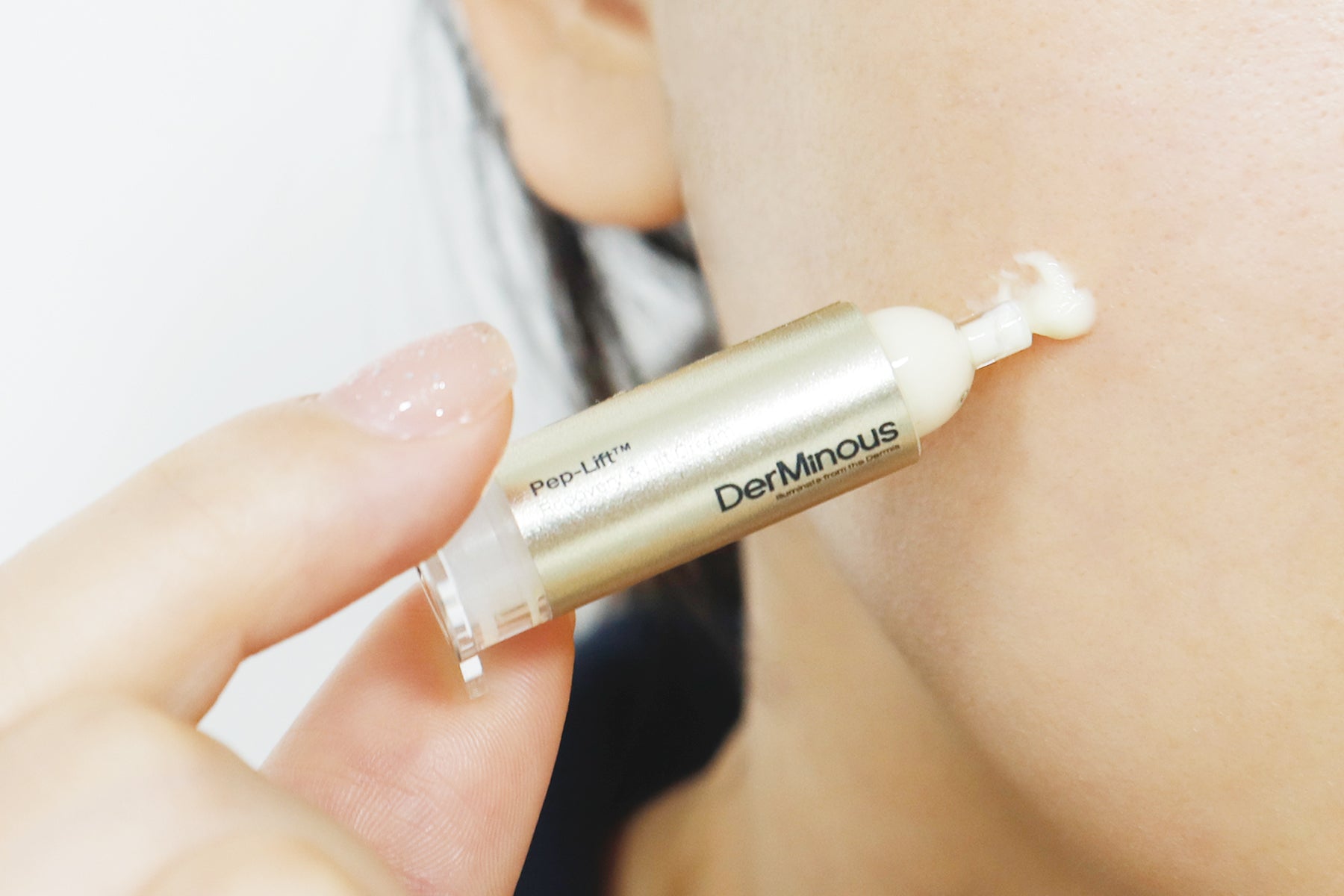
How DerMinous Helps Fade Post-Acne Marks and Hyperpigmentation
Acne is one of the most common skin conditions worldwide, affecting up to 85% of people at some point in their lives[1] . While breakouts may eventually subside, they often leave behind unwelcome reminders: post-acne marks and hyperpigmentation. These discolorations—ranging from red or purple post-inflammatory erythema (PIE) to brown or gray post-inflammatory hyperpigmentation (PIH)—can persist for months or even years, significantly impacting self-esteem and quality of life. For those seeking effective, non-invasive solutions, Derminous GeneLift™ Micro-Infusion System offers a clinically inspired, at-home approach that targets the root causes of pigmentation while reinforcing skin health.

Understanding Post-Acne Pigmentation
Post-acne marks fall into two main categories:
- Post-inflammatory erythema (PIE): Caused by dilated capillaries and inflammation, appearing as pink or red patches.
- Post-inflammatory hyperpigmentation (PIH): Triggered by excess melanin production after injury, resulting in brown, gray, or dark spots[2] .
Unlike true scarring (which involves tissue loss or deformation), these marks reside in the epidermis or upper dermis and are reversible with the right intervention. However, traditional topical treatments like hydroquinone or retinoids can be irritating—especially for sensitive or compromised skin—and often require prolonged use with inconsistent results.

This is where Derminous steps in: combining precision delivery, patented brightening actives, and barrier-supportive repair to address pigmentation without aggression.
The Derminous GeneLift™ Advantage: Science Meets Accessibility
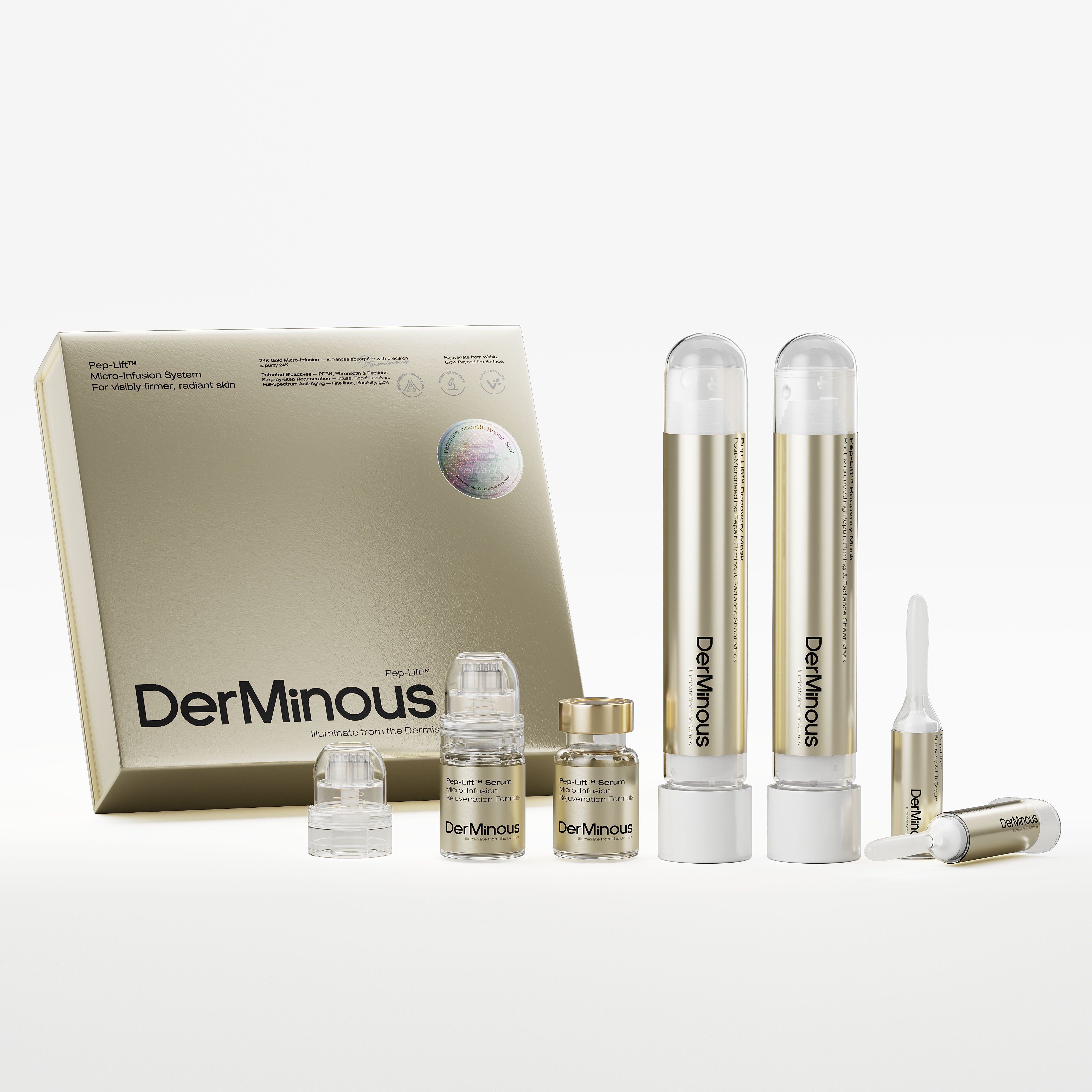
Derminous is not just another skincare brand. Born from biomedical research and aesthetic dermatology, it bridges the gap between clinical treatments and daily home care. Its flagship GeneLift™ Micro-Infusion System leverages a proprietary 24K gold-coated micro-infusion device to enhance transdermal delivery—bypassing the stratum corneum barrier without needles or pain[3] .
This technology is particularly transformative for treating hyperpigmentation because ingredient penetration is the limiting factor in most topical regimens. Studies show that conventional creams deliver less than 10% of active ingredients into viable skin layers[4] . In contrast, Derminous’s micro-channeling method increases bioavailability by up to 3x, ensuring key brightening molecules reach melanocytes and fibroblasts where they exert their effects.
Key Ingredients That Target Pigmentation at the Source
The GeneLift™ Serum is formulated with a synergistic blend of clinically validated actives:
1. Tranexamic Acid (TXA)
A well-documented tyrosinase inhibitor and anti-inflammatory agent, TXA disrupts UV-induced plasmin activity that triggers melanin synthesis. It’s especially effective for PIH and melasma, with studies showing significant improvement in just 8 weeks[5] . Unlike hydroquinone, it doesn’t cause ochronosis or rebound pigmentation.
2. Niacinamide (Vitamin B3) – Patented Purity (ZL 2020116206743)
Derminous uses a proprietary niacinamide formulation that minimizes residual nicotinic acid—a common irritant. Niacinamide inhibits melanosome transfer from melanocytes to keratinocytes, reduces inflammation, and strengthens the skin barrier[6] . Clinical trials confirm its efficacy in lightening hyperpigmentation with twice-daily 4–5% application over 8–12 weeks.


3. PDRN (Polydeoxyribonucleotide)
Derived from salmon DNA, PDRN accelerates tissue repair by stimulating adenosine A2A receptors. While primarily known for wound healing, it also reduces post-inflammatory redness and supports dermal remodeling—critical for resolving PIE and preventing PIH progression[7] .
4. Multi-Peptide Complex (Including Acetyl Hexapeptide-8 & Dipeptide Diaminobutyroyl Benzylamide Diacetate)
These signal peptides don’t just relax expression lines—they modulate inflammatory cytokines (like IL-6 and TNF-α) that exacerbate pigmentation after acne trauma. By calming the skin’s immune response, they create a less permissive environment for melanin overproduction.
Together, these ingredients work multi-modally: suppressing melanin synthesis, blocking transfer, repairing inflammation, and reinforcing resilience.
The Ritual: A Complete System for Lasting Results
Derminous doesn’t stop at serum delivery. Its four-step ritual ensures optimal outcomes:
- Micro-Infusion: The 24K gold micro-device creates transient microchannels, enabling deep penetration.
- Active Infusion: High-concentration serum floods the dermis with brightening and reparative molecules.
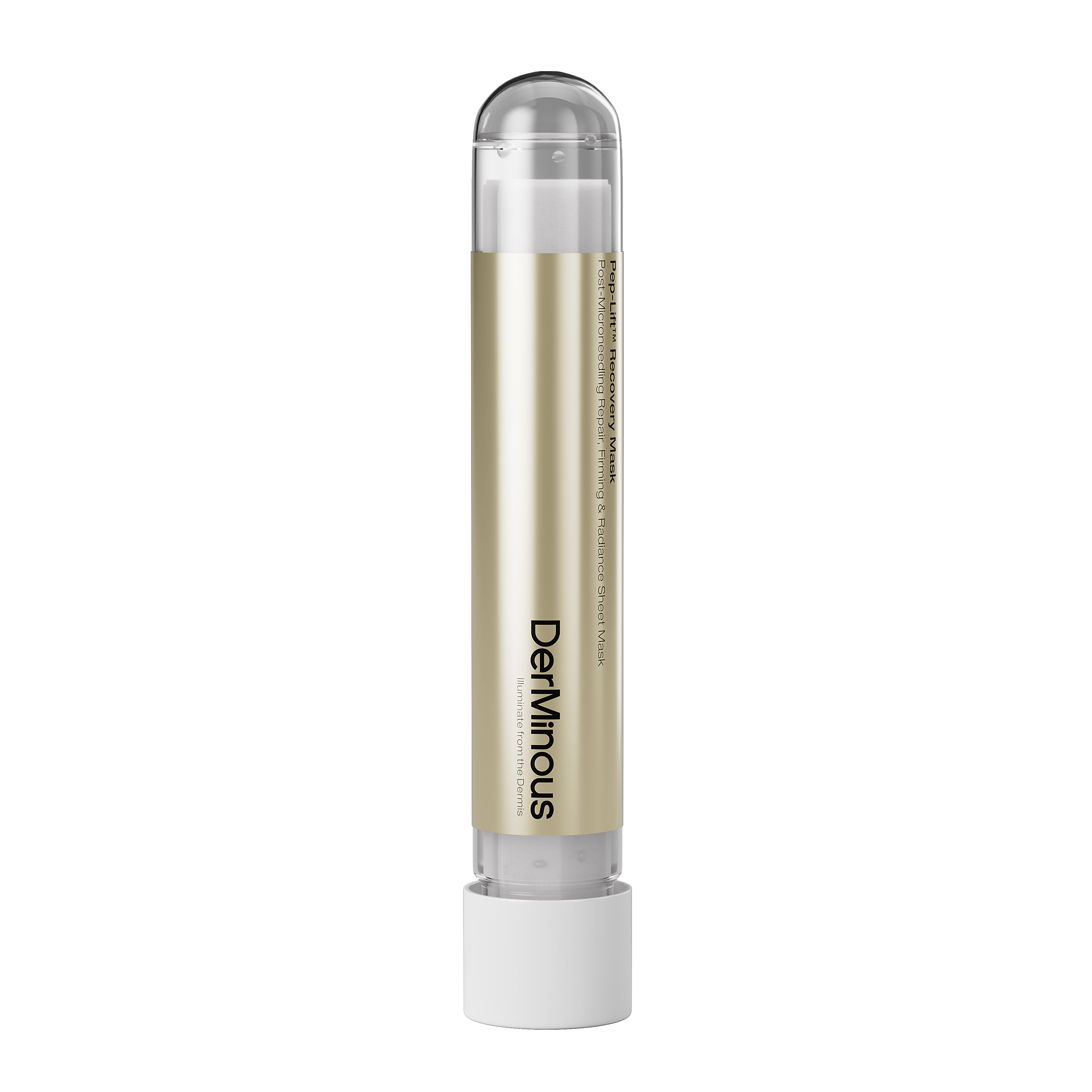
- Post-Treatment Mask: Enriched with recombinant fibronectin, panthenol, and allantoin, this mask immediately soothes redness and prevents irritation-induced pigmentation.
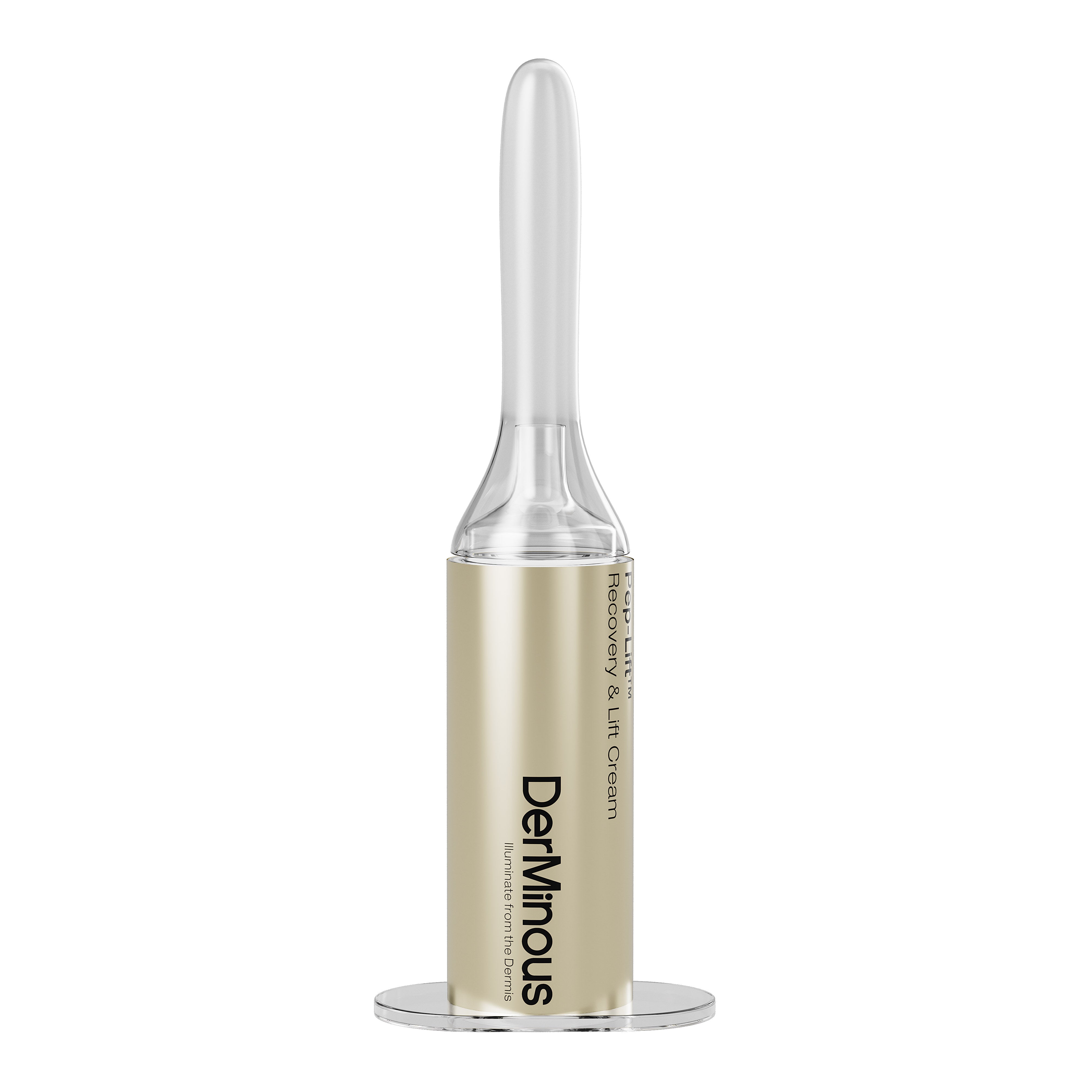
- Recovery Cream: Locks in actives while delivering additional peptides and squalane to fortify the lipid barrier—essential for preventing transepidermal water loss (TEWL) and future sensitivity.
This holistic approach aligns with modern dermatological consensus: treating pigmentation requires both correction and prevention. Aggressive exfoliation may worsen PIH in darker skin tones; Derminous avoids this pitfall by prioritizing barrier integrity alongside brightening.
Safety for Sensitive & Post-Acne Skin
Many acne-prone individuals have compromised barriers due to prior treatments (benzoyl peroxide, retinoids, or oral isotretinoin). Derminous is explicitly designed for such skin:
- Fragrance-free, alcohol-free, non-comedogenic
- Patch-tested for sensitive skin
- Includes anti-inflammatory botanicals like gentian root and snow lotus extract in the recovery cream
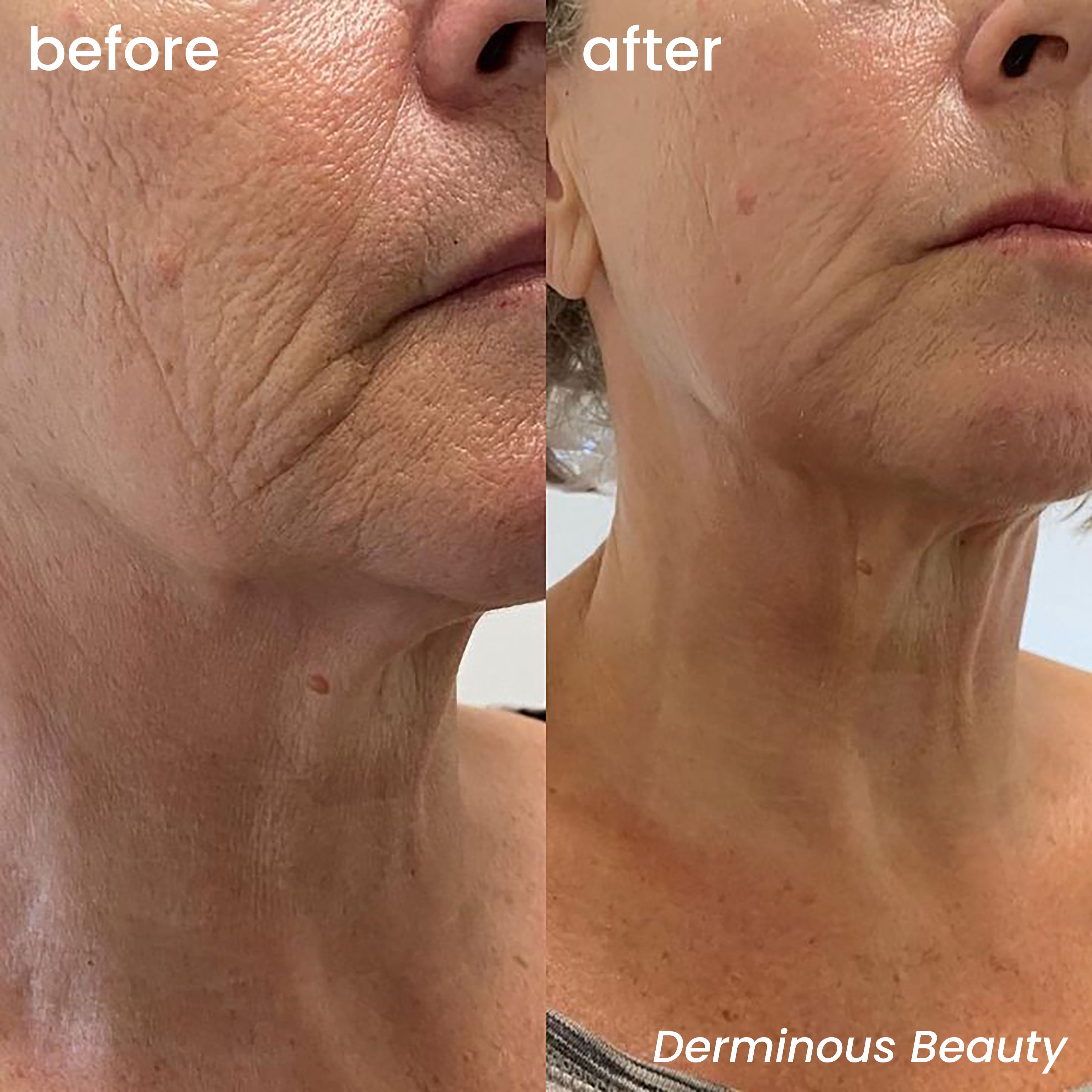
User testimonials and preliminary clinical feedback indicate reduced redness within 24 hours and visible fading of dark marks after 2–4 weekly sessions[8] .
Realistic Expectations & Usage Protocol
For post-acne marks, Derminous recommends bi-weekly use (once every 14 days). Why not daily? Because micro-channeling, even at home-grade depth (0.2–0.3mm), requires 7–10 days for full epidermal recovery. Overuse risks irritation—which ironically triggers more pigmentation.
Most users report:
- Immediate glow and hydration after first use
- Reduced redness within 3–5 days
- Noticeable lightening of brown marks by week 4
- Improved texture and radiance by week 8
Consistency matters. Unlike lasers or chemical peels that offer dramatic but risky results, Derminous provides gradual, sustainable brightening—ideal for long-term maintenance.
Conclusion: Empowerment Through Precision Skincare
In a market flooded with “miracle” brighteners, Derminous stands apart by merging medical-grade science with user-centric design. It respects the skin’s biology rather than overwhelming it. For anyone struggling with the emotional and visual burden of post-acne marks, this system offers more than fading—it offers restoration, both of skin and confidence.
As the brand’s vision states: “Let everyone take control of their skin’s future—with knowledge, science, and truly effective tools.” With Derminous GeneLift™, that future is brighter, clearer, and entirely within reach—from the comfort of home.
Footnotes
-
"Acne vulgaris." World Health Organization (WHO). https://www.who.int/news-room/fact-sheets/detail/acne-vulgaris↩
-
Davis EC, Callender VD. "Post-inflammatory hyperpigmentation: a review of the epidemiology, clinical features, and treatment options." J Clin Aesthet Dermatol. 2010. https://www.ncbi.nlm.nih.gov/pmc/articles/PMC2921758/↩
-
Lee JH et al. "Microneedling for Skin Rejuvenation: A Review." Dermatol Surg. 2020. https://doi.org/10.1097/DSS.0000000000002345↩
-
Benson HAE et al. "Topical and Transdermal Drug Delivery: Principles and Practice." Wiley-Blackwell, 2012. ↩
-
Lee A, Tan WW. "Tranexamic Acid in Dermatology: A Review." Am J Clin Dermatol. 2021. https://doi.org/10.1007/s40257-021-00607-3↩
-
Hakozaki T et al. "The effect of niacinamide on reducing cutaneous pigmentation and suppression of melanosome transfer." Br J Dermatol. 2002. https://doi.org/10.1046/j.1365-2133.2002.04740.x↩
-
Kim YS et al. "Efficacy of PDRN in Skin Regeneration and Anti-Inflammatory Effects." J Cosmet Dermatol. 2019. https://doi.org/10.1111/jocd.12876↩
-
Derminous Clinical User Feedback Summary (2025 Internal Data). Available upon request via official channels. ↩