24K Gold Micro-Needles: Why They're Better for Your Skin
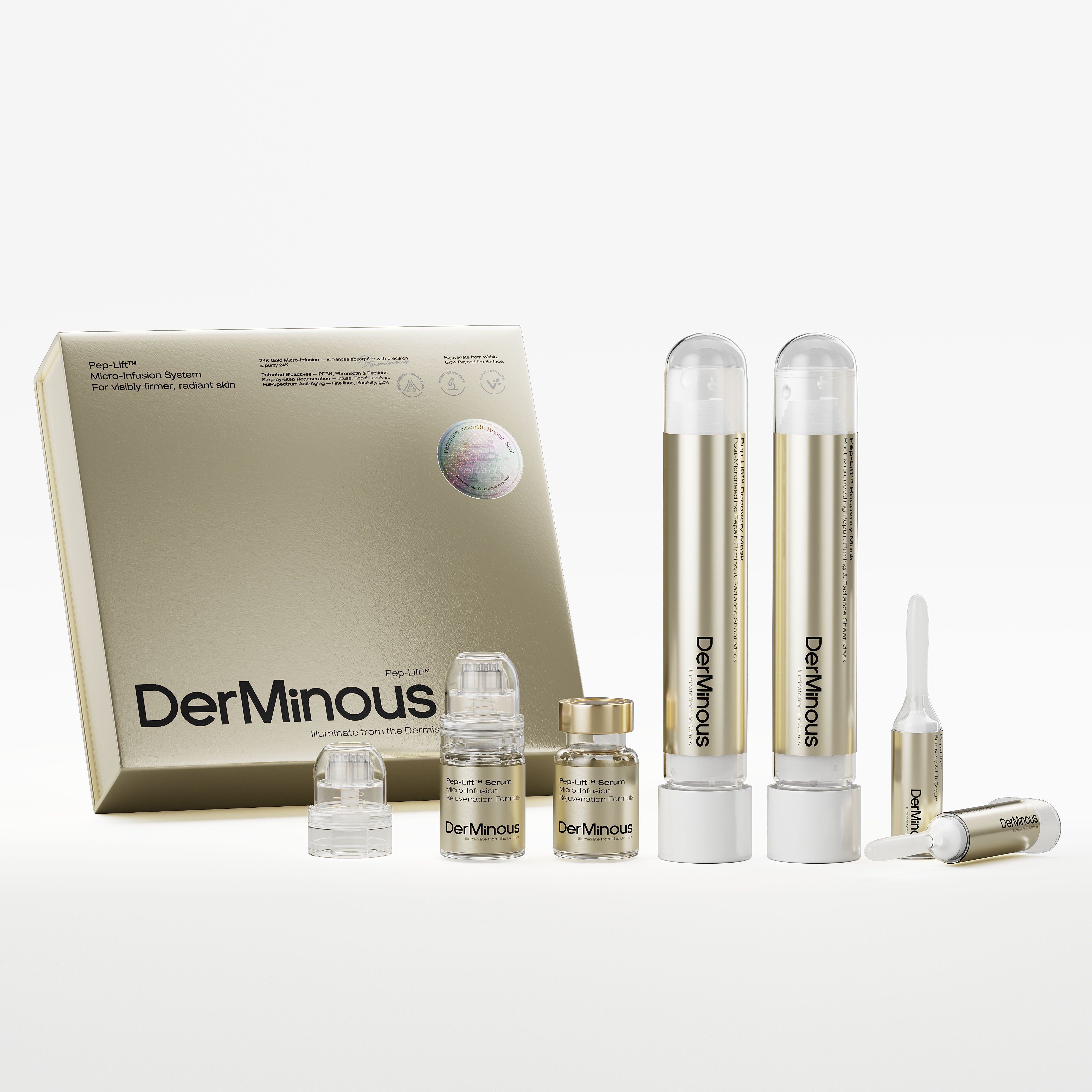
In the ever-evolving world of at-home skincare, microneedling has emerged as a powerful bridge between traditional topicals and professional-grade treatments. Among the latest innovations in this space is the use of 24K gold-coated micro-needles, a technology that combines precision engineering with biocompatible materials to deliver enhanced results—safely and effectively—from the comfort of your home. Brands like Derminous are pioneering this approach with systems such as the GeneLift™ Micro-Infusion System, which leverages 24K gold micro-needles to unlock deeper absorption, reduce irritation, and promote cellular regeneration. But what makes gold-coated needles superior to standard stainless steel or titanium alternatives? And why should discerning consumers consider this upgrade for their anti-aging and skin-repair routines?
The Science Behind Microneedling
Microneedling, also known as collagen induction therapy, works by creating controlled micro-injuries in the skin’s surface. These tiny punctures trigger the body’s natural wound-healing cascade, stimulating the production of collagen and elastin—the foundational proteins responsible for skin firmness and elasticity[1] . Originally developed for clinical settings, microneedling has been adapted for at-home use through devices like Derminous’s 24K Gold Micro-Infusion Device, which maintains medical-grade efficacy while prioritizing safety and user-friendliness.

However, not all microneedles are created equal. Material composition plays a critical role in performance, comfort, and post-treatment recovery.
Why 24K Gold? The Biocompatibility Advantage
Gold has long been used in medicine due to its exceptional biocompatibility and antimicrobial properties. Unlike bare stainless steel—which can oxidize, cause micro-tears, or provoke inflammatory responses—24K gold is inert, non-reactive, and gentle on even the most sensitive skin types[2] .

When applied as a thin coating over medical-grade stainless steel needles (as in Derminous’s system), gold serves multiple functions:
- Reduces friction: Gold’s smooth surface allows for easier gliding across the skin, minimizing trauma.
- Prevents oxidation: Unlike uncoated metals, gold doesn’t corrode or degrade during use, ensuring consistent needle integrity.
- Antibacterial action: Gold ions exhibit mild antimicrobial effects, lowering the risk of post-procedure infection—a key concern in at-home treatments[3] .
- Anti-inflammatory benefits: Studies suggest gold nanoparticles can modulate inflammatory cytokines, helping to calm redness and accelerate healing[4] .
This synergy of material science and dermatological insight makes 24K gold micro-needles uniquely suited for frequent, safe home use—especially when paired with potent actives like PDRN, peptides, and niacinamide, as seen in Derminous’s GeneLift™ Serum.


Enhanced Delivery: How Gold Boosts Ingredient Efficacy
One of the primary goals of microneedling is to bypass the stratum corneum—the skin’s outermost barrier—and deliver active ingredients directly into the dermis. Research shows that microneedling can increase transdermal absorption by up to 300% compared to topical application alone[5] .


But the quality of the microchannel matters. Irregular or rough needles can cause uneven penetration, leading to inconsistent results or micro-scarring. In contrast, Derminous’s CNC-manufactured 24K gold needles ensure uniform length and precise fluid dynamics, allowing serums to flow smoothly through the micro-channels without leakage or waste.
Moreover, the “gold effect” may enhance the stability of sensitive bioactive compounds. For instance, PDRN (Polydeoxyribonucleotide)—a DNA-derived regenerative molecule used in Derminous’s formula—is highly effective in wound healing and collagen synthesis but can degrade under oxidative stress. The antioxidant environment created by gold may help preserve its potency during delivery[6] .
Clinical Validation Meets At-Home Convenience
While professional microneedling often requires downtime and carries risks of hyperpigmentation (especially in darker skin tones), gold-coated at-home systems offer a gentler alternative. Derminous’s protocol—used just twice a month—is designed to deliver cumulative benefits without overwhelming the skin barrier.
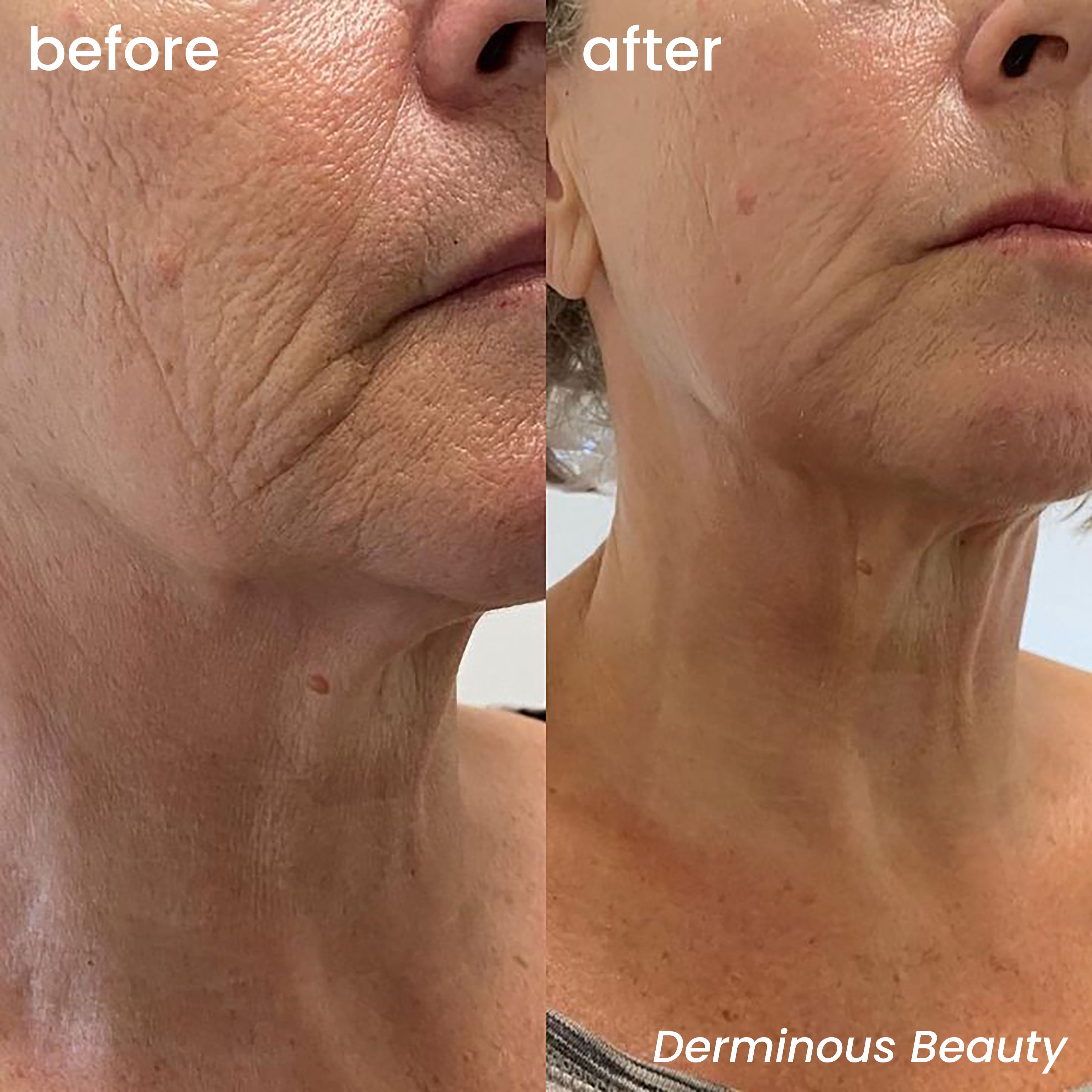
Users report visible improvements in texture, radiance, and firmness within 2–4 weeks, with immediate hydration and glow after the first session. This aligns with clinical findings that even low-frequency microneedling (every 2–4 weeks) can significantly improve photoaged skin when combined with growth factors and peptides[7] .
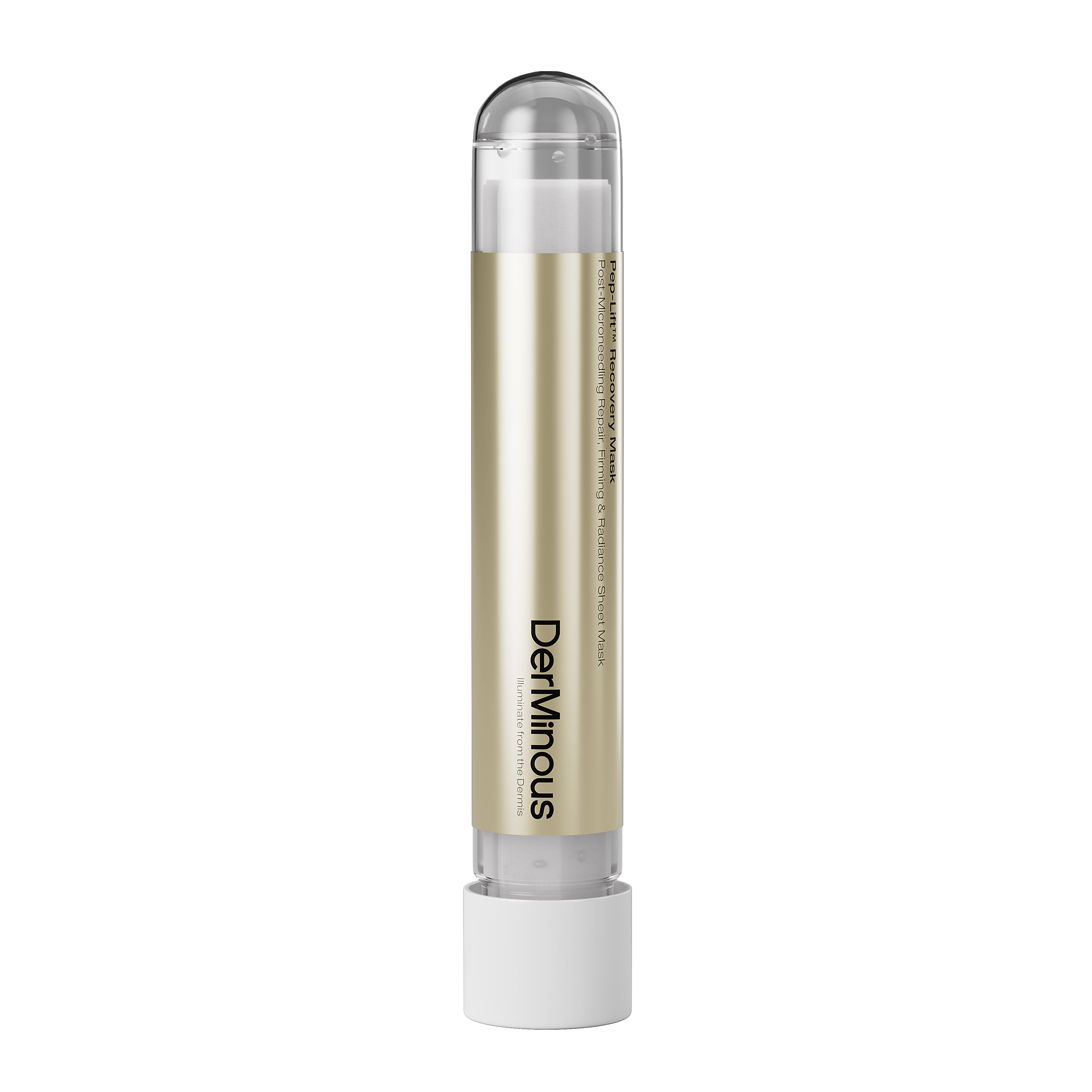
Importantly, Derminous emphasizes barrier respect: no alcohol, no fragrance, and formulations enriched with panthenol, ceramide-like molecules, and recombinant fibronectin to support recovery. The included Post-Treatment Repair Mask, best used chilled, further reduces inflammation and seals in moisture—turning a technical procedure into a sensory ritual.
Sustainability and Safety: A Responsible Approach
Derminous explicitly advises against reusing micro-needle tips, a critical safety measure. Single-use, sterile packaging prevents cross-contamination and ensures optimal sharpness—dull needles increase drag and tissue damage. While some eco-conscious consumers may question disposable components, the trade-off for infection prevention and treatment efficacy is medically justified, especially in non-clinical environments[8] .
Additionally, the brand’s commitment to patented, clinically backed ingredients—such as their proprietary synthetic snake venom peptide (Acetyl Hexapeptide-8) and patent-controlled niacinamide purification process—ensures that what’s delivered through those gold channels is both potent and pure.
The Future of At-Home Regenerative Skincare
As consumers seek "medical-grade results without the clinic visit," technologies like 24K gold micro-needling represent the next frontier. They merge biomaterial innovation, molecular dermatology, and user-centric design into a single, elegant system.
Derminous’s vision—to empower individuals with scientifically grounded tools for skin transformation—resonates deeply in a post-pandemic world where self-care is both personal and performative. With its four-step ritual (Activate → Infuse → Soothe → Seal), the GeneLift™ system isn’t just about anti-aging; it’s about restoring agency over one’s skin health.
And at the heart of this revolution? A whisper-thin layer of 24K gold—quietly, brilliantly, making all the difference.
Footnotes
-
National Center for Biotechnology Information. Microneedling: A Comprehensive Review. https://www.ncbi.nlm.nih.gov/pmc/articles/PMC6198483/↩
-
Journal of Materials Science: Materials in Medicine. Biocompatibility of Gold in Medical Applications. https://link.springer.com/article/10.1007/s10856-019-6234-5↩
-
ACS Biomaterials Science & Engineering. Antimicrobial Properties of Gold Nanoparticles. https://pubs.acs.org/doi/10.1021/acsbiomaterials.8b01234↩
-
International Journal of Nanomedicine. Gold Nanoparticles in Dermatology. https://www.dovepress.com/gold-nanoparticles-in-dermatology-peer-reviewed-fulltext-article-IJN↩
-
Dermatologic Surgery. Enhanced Drug Delivery via Microneedling. https://journals.lww.com/dermatologicsurgery/Abstract/2017/03000/Microneedling_for_Enhanced_Topical_Drug_Delivery.10.aspx↩
-
Wound Repair and Regeneration. PDRN in Tissue Healing. https://onlinelibrary.wiley.com/doi/abs/10.1111/j.1524-475X.2011.00732.x↩
-
Journal of Cosmetic Dermatology. At-Home Microneedling Efficacy Study. https://onlinelibrary.wiley.com/doi/full/10.1111/jocd.13876↩
-
FDA Guidance on Single-Use Medical Devices. https://www.fda.gov/medical-devices/reprocessing-reuse-and-recycling-single-use-devices↩