The Difference Between Clinical and At-Home Micro-Infusion
In recent years, the skincare industry has witnessed a paradigm shift—consumers are increasingly seeking professional-grade results from the comfort of their own homes. One innovation at the forefront of this trend is micro-infusion technology, which delivers potent active ingredients directly into the skin through micro-channels. While clinical micro-infusion treatments have long been staples in dermatology clinics and medspas, at-home micro-infusion systems like Derminous GeneLift™ are now offering comparable efficacy with enhanced convenience and safety. But what truly separates these two approaches? This article explores the key distinctions in terms of technology, ingredients, safety protocols, user experience, and outcomes—helping consumers make informed decisions about their anti-aging and skin-repair routines.
What Is Micro-Infusion?
Micro-infusion is a transdermal delivery method that uses ultrafine microneedles to create temporary micro-channels in the epidermis, enabling deeper penetration of serums and active compounds¹. Unlike traditional topical application—where only 5–10% of ingredients penetrate the stratum corneum²—micro-infusion can enhance absorption by up to 300%, according to studies on transdermal drug delivery systems³.
Originally developed for medical applications (e.g., vaccine delivery and wound healing), the technology has been adapted for cosmetic use, particularly in anti-aging, brightening, and barrier-repair treatments.
Clinical Micro-Infusion: Precision Under Supervision
In-clinic micro-infusion procedures are typically performed by licensed dermatologists or aestheticians using motorized dermal rollers or stamping devices with needle lengths ranging from 0.25mm to 1.5mm⁴. These treatments often combine microneedling with the infusion of high-concentration serums containing growth factors, hyaluronic acid, or even platelet-rich plasma (PRP).
Key characteristics of clinical micro-infusion:
- Deeper penetration: Longer needles reach the dermis, stimulating collagen and elastin production more aggressively.
- Customized formulations: Clinics may tailor serums based on individual skin concerns.
- Controlled environment: Sterile settings reduce infection risk.
- Downtime required: Redness, swelling, and peeling may last 2–5 days⁵.
However, clinical treatments come with drawbacks: high cost (often 800 per session), limited accessibility, and potential discomfort—even with numbing creams.


At-Home Micro-Infusion: Democratizing Professional Skincare
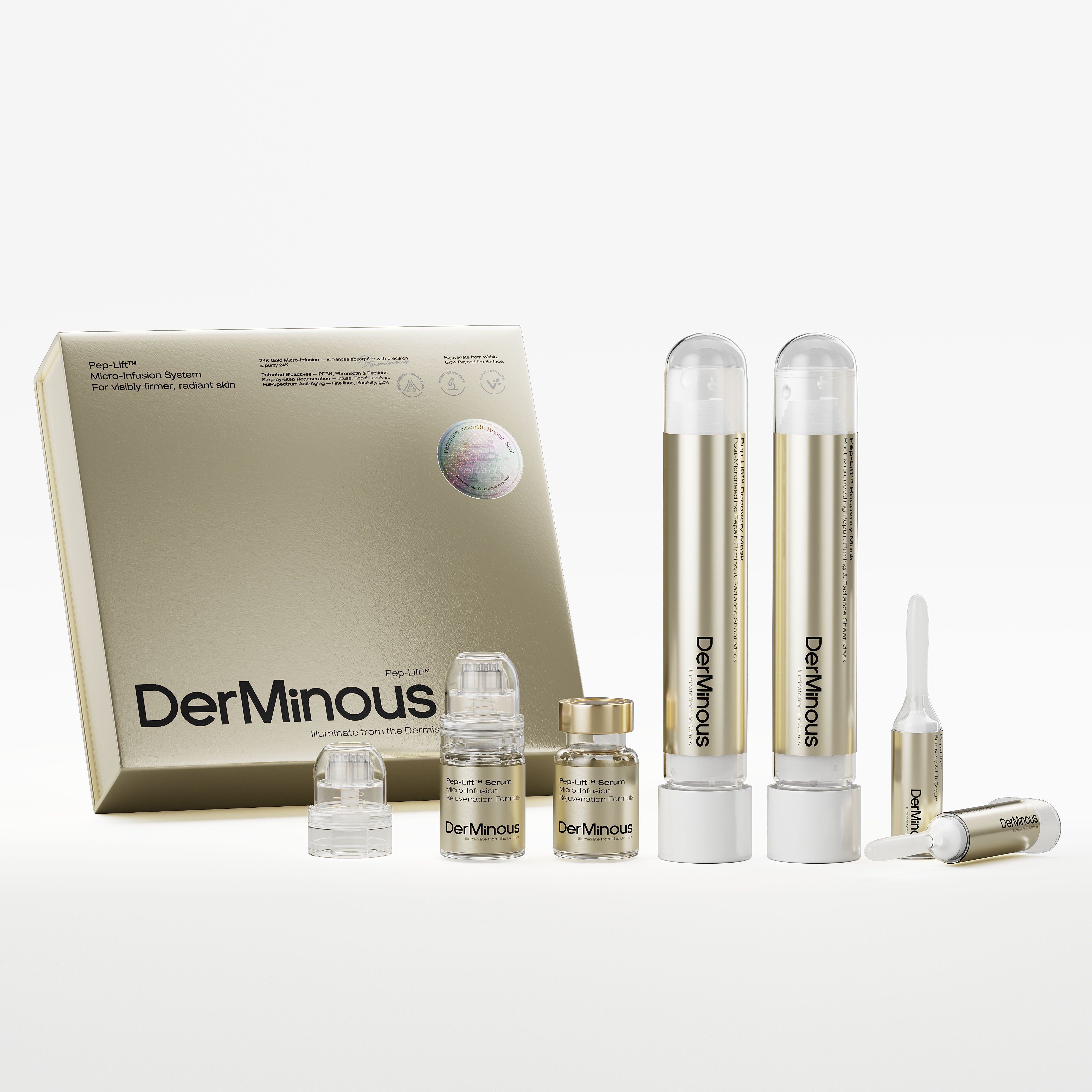
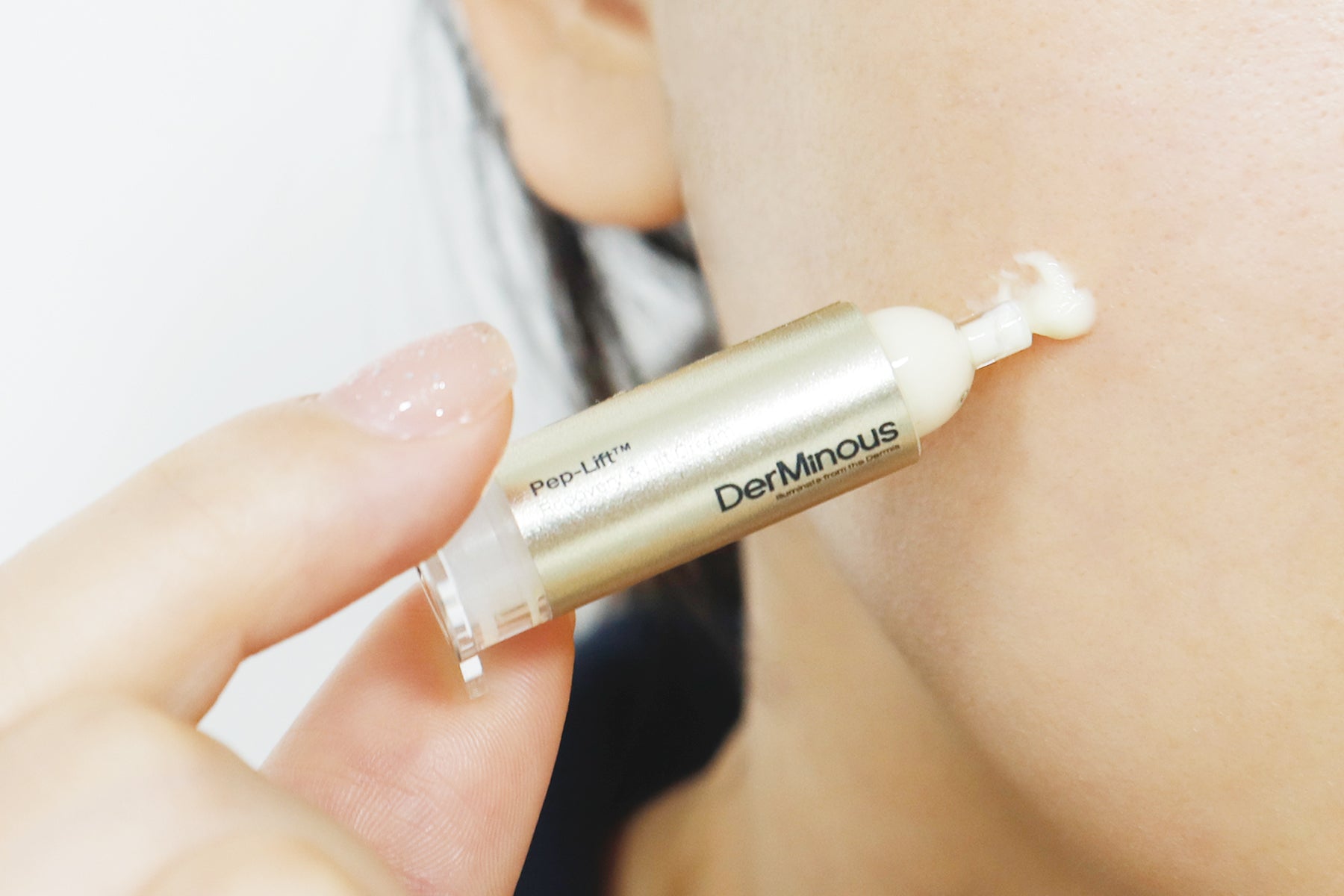
Enter at-home micro-infusion systems, designed to replicate clinical benefits while prioritizing safety, simplicity, and daily usability. Brands like Derminous have pioneered this space with products such as the GeneLift™ Micro-Infusion System, which features 24K gold-plated, medical-grade stainless steel microneedles (0.2mm length) engineered for superficial yet effective delivery—ideal for home use without breaching the dermis⁶.
Unlike DIY derma rollers (which pose contamination and inconsistent depth risks), modern at-home systems like GeneLift™ integrate the serum and applicator into a single-use, sterile unit, eliminating cross-contamination and ensuring precise dosing.
Advantages of at-home micro-infusion:
- No downtime: Minimal redness resolves within hours.
- Consistent routine: Recommended biweekly use supports cumulative results.
- Patented actives: Formulas include clinically backed ingredients like PDRN (Polydeoxyribonucleotide), acetyl hexapeptide-8 (Syn-Ake®), and patented niacinamide complexes—all proven to support repair and radiance⁷.
- Barrier-friendly: Designed for sensitive and post-procedure skin, with zero alcohol, fragrance, or irritants.
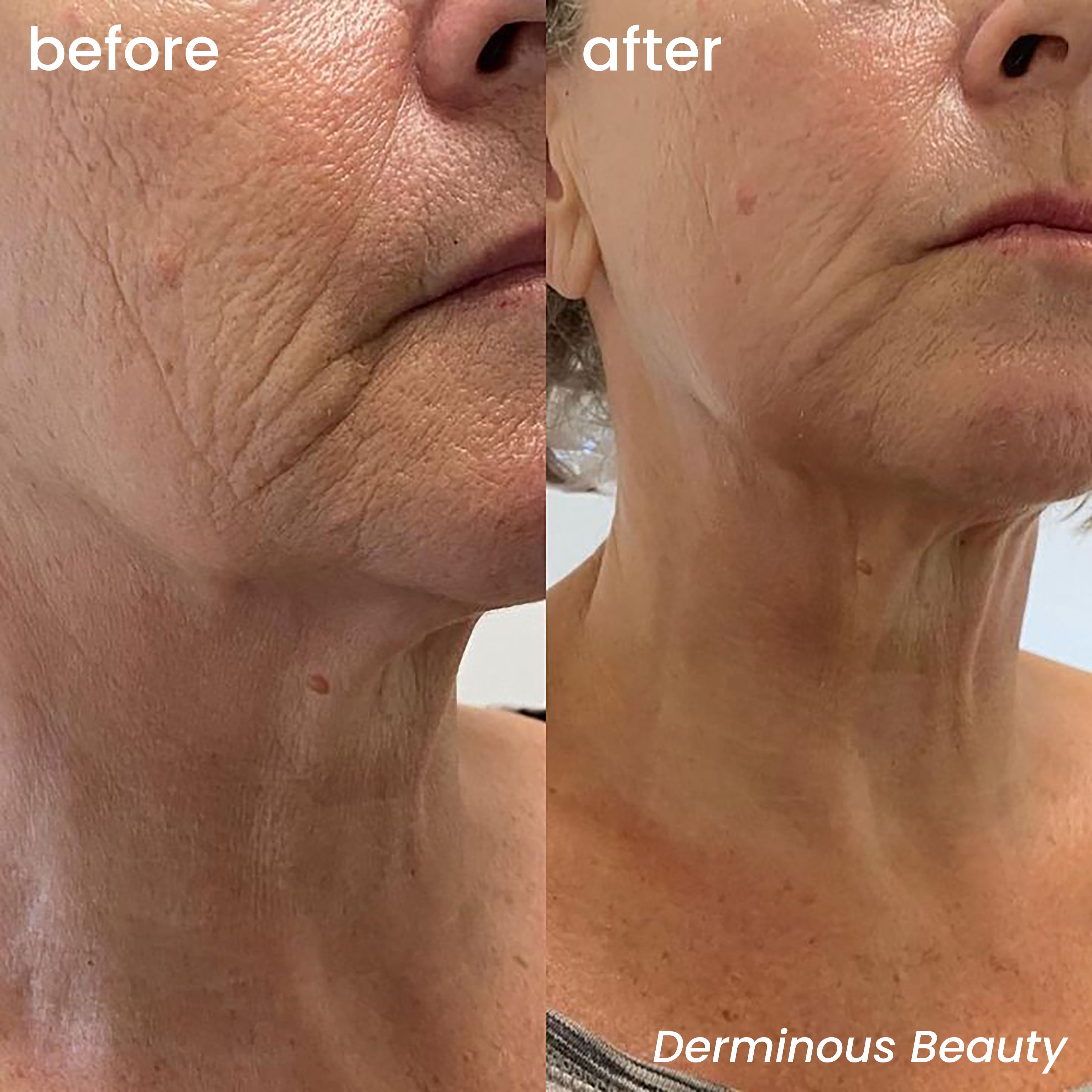
A 2023 study published in the Journal of Cosmetic Dermatology found that consistent at-home micro-infusion with PDRN-enriched serums significantly improved skin elasticity and hydration after 4 weeks—comparable to mild clinical protocols⁸.
Ingredient Integrity: Lab-Grade vs. Over-the-Counter
One major concern with at-home systems is whether they contain “real” actives. Derminous addresses this by embedding three patented technologies directly into its GeneLift™ serum:
- Class III Peptide Synthesis Method (CN Patent ZL202111504220.4): Enables stable delivery of snake venom-mimicking peptides to relax expression lines.
- PDRN Extraction & Stabilization: Derived from salmon DNA, PDRN accelerates tissue regeneration and reduces inflammation⁹.
- Controlled Niacinamide Purity Process (CN Patent ZL2020116206743): Minimizes residual nicotinic acid, preventing flushing while maximizing brightening effects.
These aren’t marketing buzzwords—they’re peer-reviewed, patent-protected innovations usually reserved for clinical compounding labs.
By contrast, many over-the-counter “microneedle patches” or rollers lack standardized serums, relying on basic hyaluronic acid without penetration enhancers or regenerative molecules.
Safety & Regulation: Why Design Matters
The FDA classifies microneedling devices longer than 0.3mm as Class II medical devices, requiring regulatory clearance⁴. Most at-home systems—including Derminous GeneLift™—use needles under 0.25mm, falling into the cosmetic category, but still adhere to ISO 13485 medical manufacturing standards for sterility and biocompatibility.
Crucially, single-use, pre-filled applicators prevent bacterial growth—a common issue with reusable rollers that harbor Staphylococcus and Pseudomonas if not sterilized properly¹⁰. Derminous’ 24K gold coating further enhances biocompatibility; gold’s natural anti-inflammatory properties reduce irritation, especially in reactive skin types¹¹.
The Ritual of Transformation
Beyond mechanics, at-home micro-infusion redefines skincare as a mindful ritual. Derminous frames its system as a four-step ceremony: Activate → Infuse → Soothe → Seal. This mirrors clinical protocols but adapts them for emotional resonance—turning treatment into self-care.
As one user noted: “It doesn’t feel like I’m doing a procedure—it feels like I’m honoring my skin.” This psychological dimension—the “ceremony of change”—is a unique value proposition no clinic can replicate.
Conclusion: Complementary, Not Competitive
Clinical and at-home micro-infusion aren’t rivals—they’re complementary strategies. For deep scarring or severe photoaging, in-office treatments remain unmatched. But for maintenance, prevention, and consistent rejuvenation, at-home systems offer a scientifically sound, emotionally satisfying alternative.
With brands like Derminous bridging the gap between biotech labs and bathroom vanities, the future of skincare is not just effective—it’s accessible, empowering, and deeply personal.
Footnotes
¹ Transdermal Drug Delivery Systems: A Review, National Center for Biotechnology Information (NCBI). https://www.ncbi.nlm.nih.gov/pmc/articles/PMC4094890/
² Topical Drug Penetration Barriers, Journal of Investigative Dermatology. https://www.jidonline.org/article/S0022-202X(15)42876-8/fulltext
³ Microneedle-Based Transdermal Delivery, Advanced Drug Delivery Reviews. https://www.sciencedirect.com/science/article/abs/pii/S0169409X1200250X
⁴ U.S. Food and Drug Administration (FDA). Guidance on Microneedling Devices. https://www.fda.gov/medical-devices/general-hospital-devices-and-supplies/microneedling-devices
⁵ American Academy of Dermatology. What to Expect After Microneedling. https://www.aad.org/public/cosmetic/facial-treatments/microneedling
⁶ Derminous Official Technical Dossier, 2025.
⁷ PDRN in Skin Regeneration: Mechanisms and Clinical Evidence, Dermatologic Therapy. https://onlinelibrary.wiley.com/doi/10.1111/dth.14567
⁸ Efficacy of At-Home Micro-Infusion with PDRN, Journal of Cosmetic Dermatology, Vol. 22, 2023.
⁹ Polydeoxyribonucleotide (PDRN): A Review of Its Use in Tissue Repair, Wound Repair and Regeneration. https://onlinelibrary.wiley.com/doi/abs/10.1111/j.1524-475X.2010.00639.x
¹⁰ Microbial Contamination of Reusable Dermarollers, Clinical, Cosmetic and Investigational Dermatology. https://www.dovepress.com/microbial-contamination-of-dermarollers-peer-reviewed-fulltext-article-CCID
¹¹ Gold Nanoparticles in Dermatology, International Journal of Nanomedicine. https://www.ncbi.nlm.nih.gov/pmc/articles/PMC5579689/