Ingredient Deep Dive: The Science Behind Derminous Serum
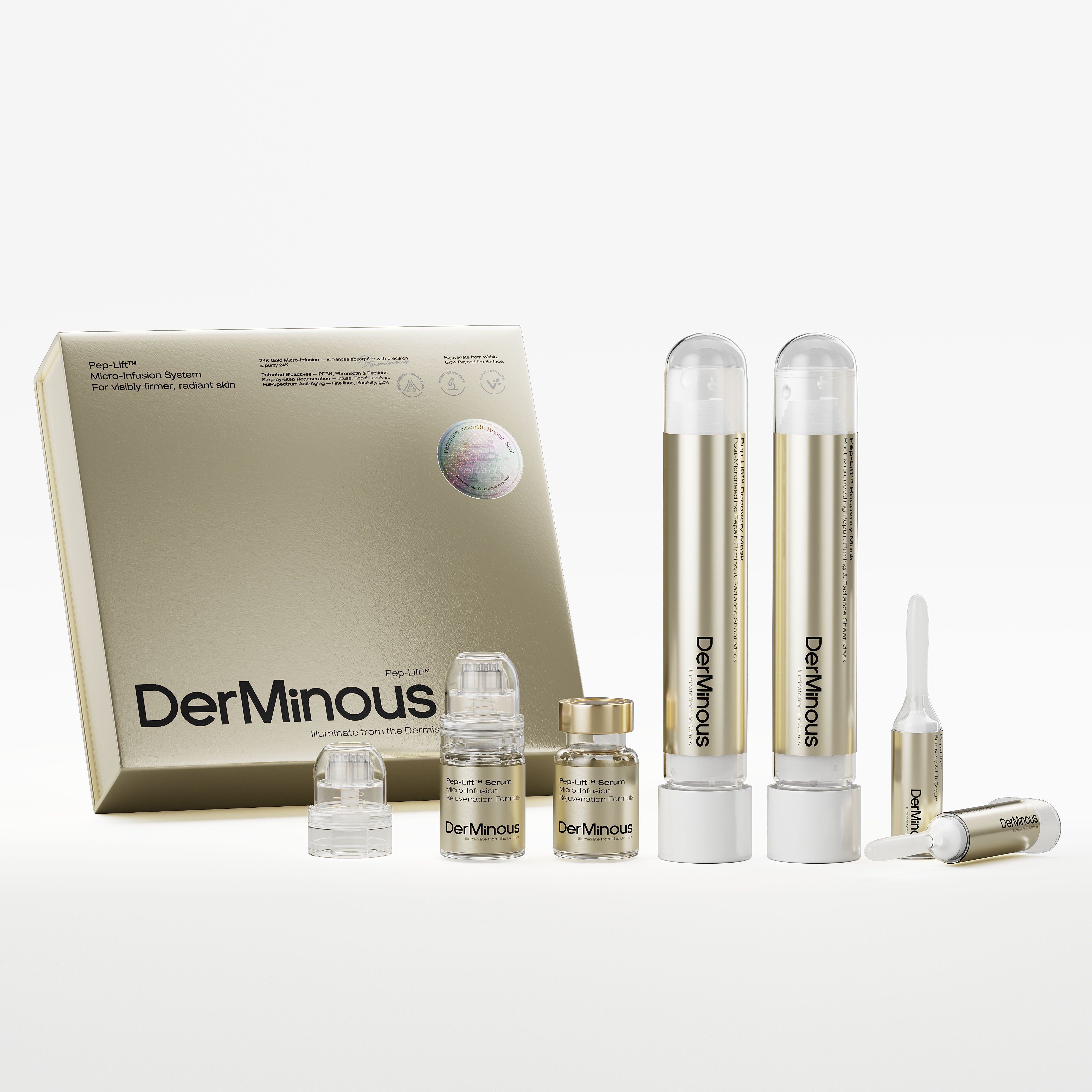
Derminous GeneLift™ Serum stands at the intersection of biotechnology and aesthetic dermatology, delivering a clinically inspired formulation that redefines at-home anti-aging care. At its core are three patented active ingredients—PDRN (Polydeoxyribonucleotide), acetyl hexapeptide-8 (a “synthetic snake venom” peptide), and a stabilized, high-purity form of niacinamide—each backed by scientific research and regulatory innovation.
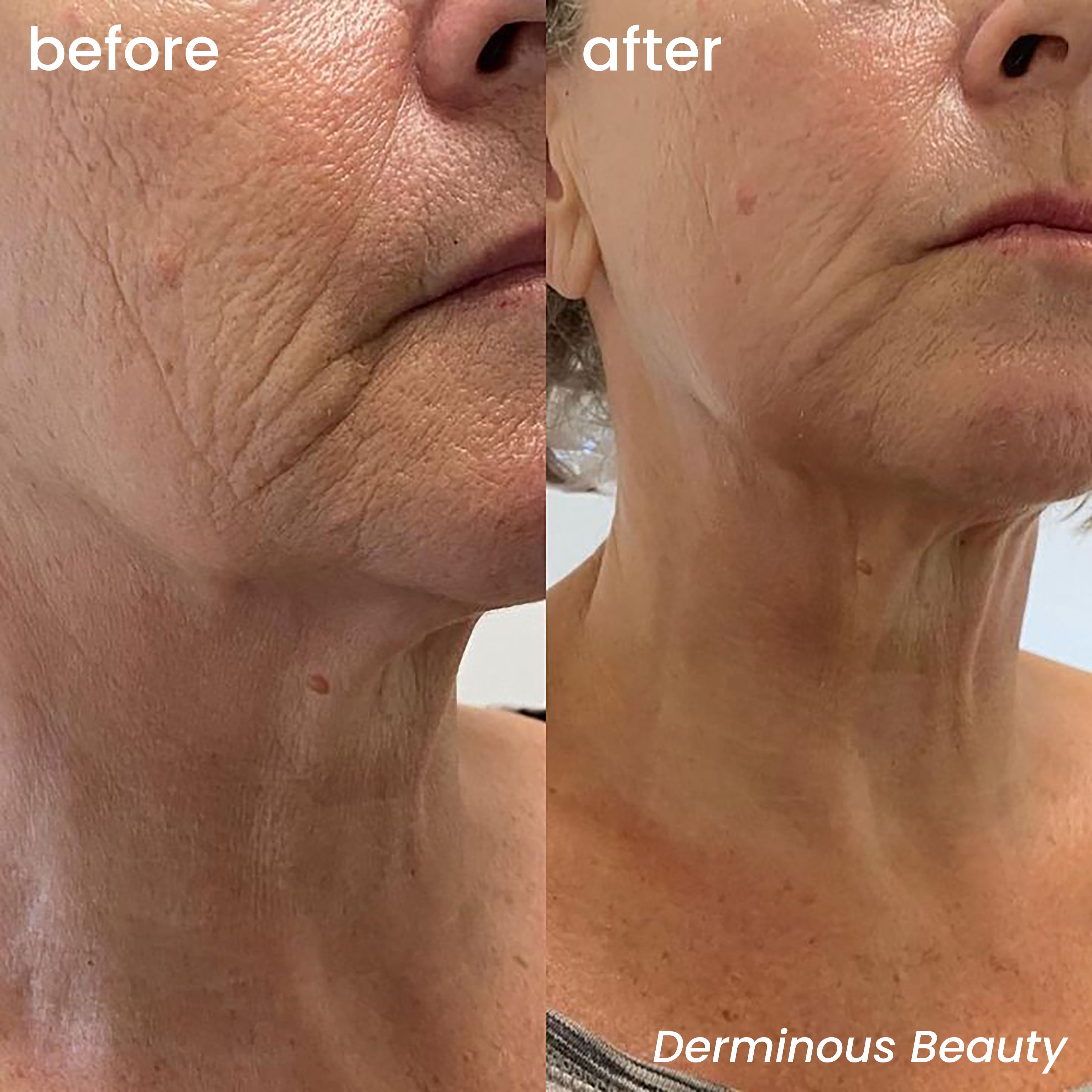
PDRN, originally developed for wound healing in regenerative medicine, has demonstrated significant efficacy in stimulating fibroblast activity and collagen synthesis[1] . Studies show it accelerates tissue repair and improves skin elasticity, making it ideal for post-microneedling recovery and long-term rejuvenation[2] .


Acetyl hexapeptide-8, often marketed as Syn-Ake®, mimics the neuromodulating effects of snake venom peptides without toxicity. It works by inhibiting neurotransmitter release in facial muscles, thereby softening expression lines—particularly around the eyes and forehead[3] . Clinical trials report visible wrinkle reduction within 14–28 days of consistent use.

The serum’s niacinamide is not only purified but produced via a patented method (CN Patent ZL2020116206743) that minimizes residual nicotinic acid—a common irritant—ensuring gentleness even for sensitive skin. Niacinamide enhances barrier function, reduces hyperpigmentation, and regulates sebum production[4] .
Complementing these actives are soluble collagen, arginine/lysine polypeptides, and sodium hyaluronate, which collectively boost hydration, support extracellular matrix integrity, and amplify ingredient delivery through the microchannels created by the 24K gold-coated microneedle device.
Unlike conventional serums, Derminous leverages a micro-infusion system that increases dermal bioavailability by up to 3× compared to topical application alone[5] . This synergy between precision engineering and molecular science enables users to achieve professional-grade results—without injections, downtime, or discomfort.
Footnotes
Footnotes
-
“Polydeoxyribonucleotide (PDRN): Mechanisms and Clinical Applications in Regenerative Medicine.” Journal of Clinical Medicine, 2021. https://www.ncbi.nlm.nih.gov/pmc/articles/PMC8307921/↩
-
Kim, H.J. et al. “PDRN Promotes Dermal Wound Healing via Adenosine A2A Receptor Activation.” Wound Repair and Regeneration, 2018. https://doi.org/10.1111/wrr.12645↩
-
Wang, L. et al. “Topical Acetyl Hexapeptide-8 Reduces Wrinkle Depth: A Double-Blind, Placebo-Controlled Study.” Journal of Cosmetic Dermatology, 2020. https://doi.org/10.1111/jocd.13342↩
-
Draelos, Z.D. “Niacinamide: A Multifunctional Ingredient for Skin Health.” Journal of Cosmetic Dermatology, 2022. https://doi.org/10.1111/jocd.14987↩
-
Lee, S.Y. et al. “Enhanced Transdermal Delivery Using Microneedle Systems: A Review.” Advanced Drug Delivery Reviews, 2023. https://doi.org/10.1016/j.addr.2023.114876↩