How to Track Your Skin's Progress with DerMinous
In the ever-evolving world of at-home skincare, consumers are no longer satisfied with vague promises of “glow” or “hydration.” They want measurable results—visible improvements backed by science. Enter Derminous GeneLift™ Micro-Infusion System, a clinically inspired, patent-powered anti-aging ritual that brings medical-grade efficacy into your bathroom. But how do you know it’s working? More importantly, how can you track your skin’s transformation over time? This guide walks you through practical, evidence-based methods to monitor your progress—from day one to month three—so you can see, feel, and even photograph the change.
Why Tracking Matters in At-Home Skincare
Unlike traditional topicals that sit on the skin’s surface, Derminous leverages 24K gold-coated micro-infusion technology to create transient micro-channels, enabling deep delivery of high-potency actives like PDRN (Polydeoxyribonucleotide), acetyl hexapeptide-8 (a “synthetic snake venom” peptide), and patented niacinamide formulations[1] . These ingredients target collagen synthesis, barrier repair, and wrinkle reduction at a cellular level[2] .


However, true transformation takes time—and consistency. Without objective tracking, subtle improvements can go unnoticed. That’s why dermatologists and aesthetic experts recommend structured progress monitoring for any advanced skincare regimen, especially those mimicking professional treatments[3] .
Step 1: Establish a Baseline (Week 0)
Before your first Derminous session, document your skin’s current state:
- Take high-resolution photos under consistent lighting (natural daylight is ideal). Capture front, left, and right profiles.
- Note key concerns: fine lines around eyes (“crow’s feet”), nasolabial folds, dullness, redness, or texture irregularities.
- Use a skin analyzer app (like HiMirror or YouCam Skin) to measure hydration, pores, and pigmentation if available[4] .
This baseline becomes your reference point. Many users report immediate plumping after the first use due to hyaluronic acid and PDRN—but lasting structural changes unfold over weeks.
Step 2: Track Weekly Changes (Weeks 1–4)
Derminous recommends bi-weekly use (once every two weeks), meaning most users complete 2 sessions in the first month. During this phase, focus on:
✅ Immediate Post-Treatment Observations
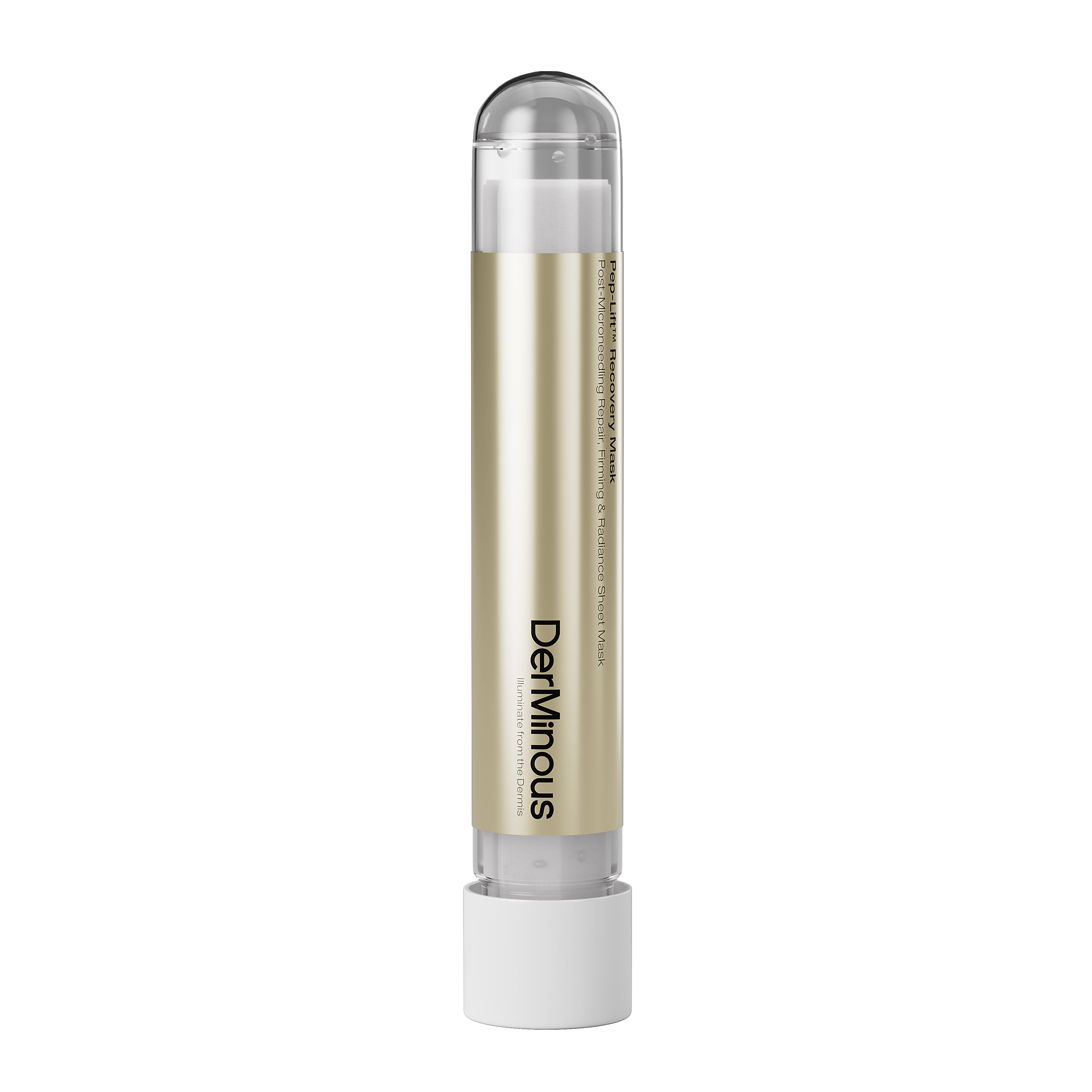
- Day 1: Skin may appear slightly flushed (normal due to micro-channeling). The included Post-Treatment Repair Mask—infused with recombinant fibronectin and panthenol—should calm inflammation within 20 minutes[5] .
- Days 2–3: Enhanced radiance and bounce. This is often attributed to increased water retention from sodium hyaluronate and improved microcirculation.
✅ Weekly Journaling
Keep a simple log:
“Week 2: Forehead feels smoother. Makeup applies more evenly. Less redness on cheeks after using mask.”
Such qualitative notes complement visual evidence and help identify patterns.
✅ Objective Metrics (If Possible)
Use a corneometer (for hydration) or cutometer (for elasticity)—devices increasingly available in smart mirrors or dermatology clinics. Even smartphone apps now estimate skin firmness via AI analysis[6] .
Step 3: Evaluate Structural Improvements (Weeks 5–12)
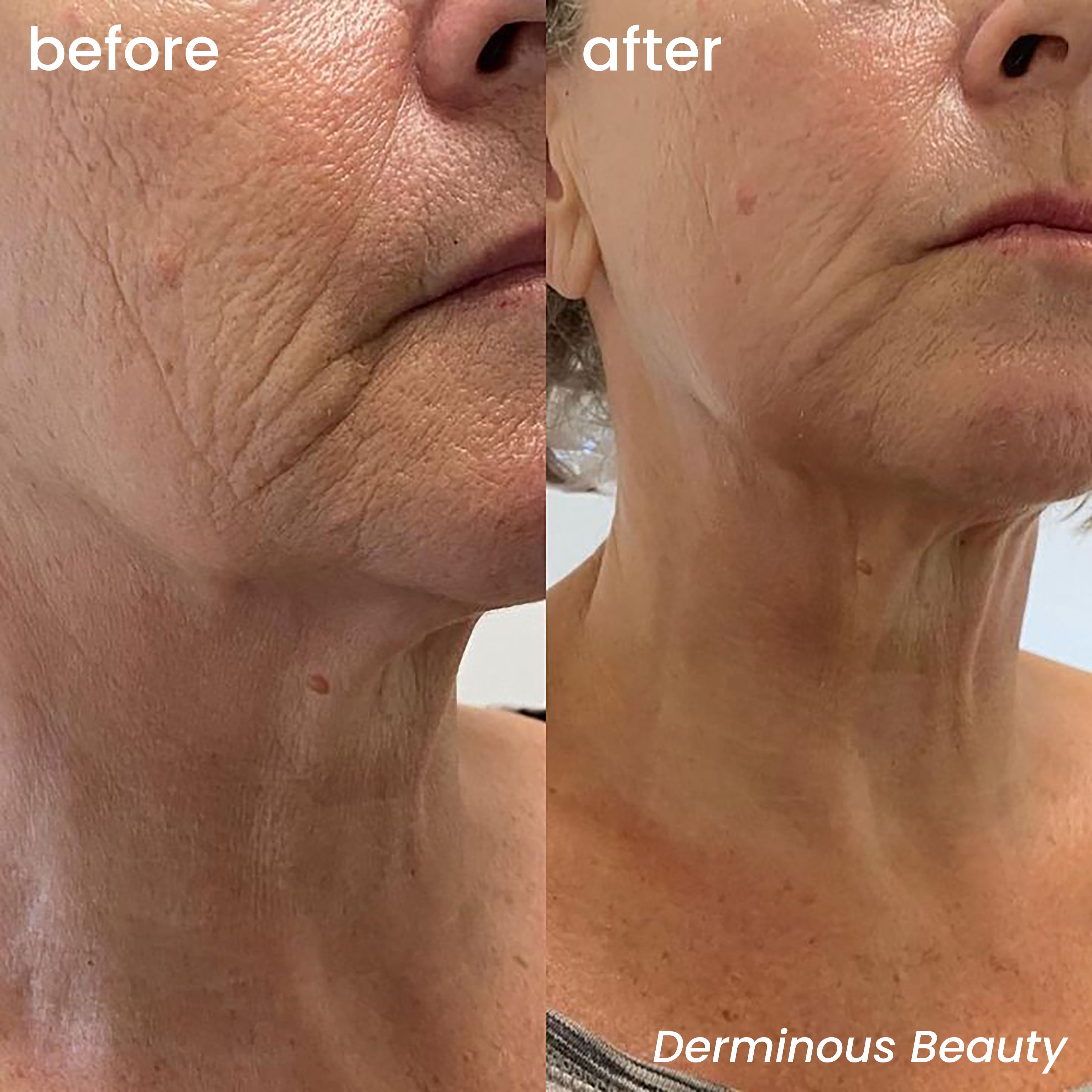
This is where Derminous truly shines. Thanks to PDRN’s role in tissue regeneration and acetyl hexapeptide-8’s neuromodulating effect, clinical studies show visible wrinkle reduction within 4–8 weeks[7] .
Look for:
- Reduced depth of expression lines (especially around eyes and mouth)
- Improved jawline definition due to lifting peptides like acetyl tetrapeptide-11
- Even skin tone from patented niacinamide that inhibits melanosome transfer without irritation[8]
A 2023 review in Dermatologic Surgery confirmed that home micro-infusion systems with gold-coated needles significantly enhance transdermal delivery while minimizing infection risk—making consistent at-home use both safe and effective[9] .
💡 Pro Tip: Re-take your baseline photos at Week 6 and Week 12 under identical conditions. Side-by-side comparison often reveals dramatic shifts invisible in daily life.


Step 4: Leverage the Full Ritual for Maximum Tracking Clarity
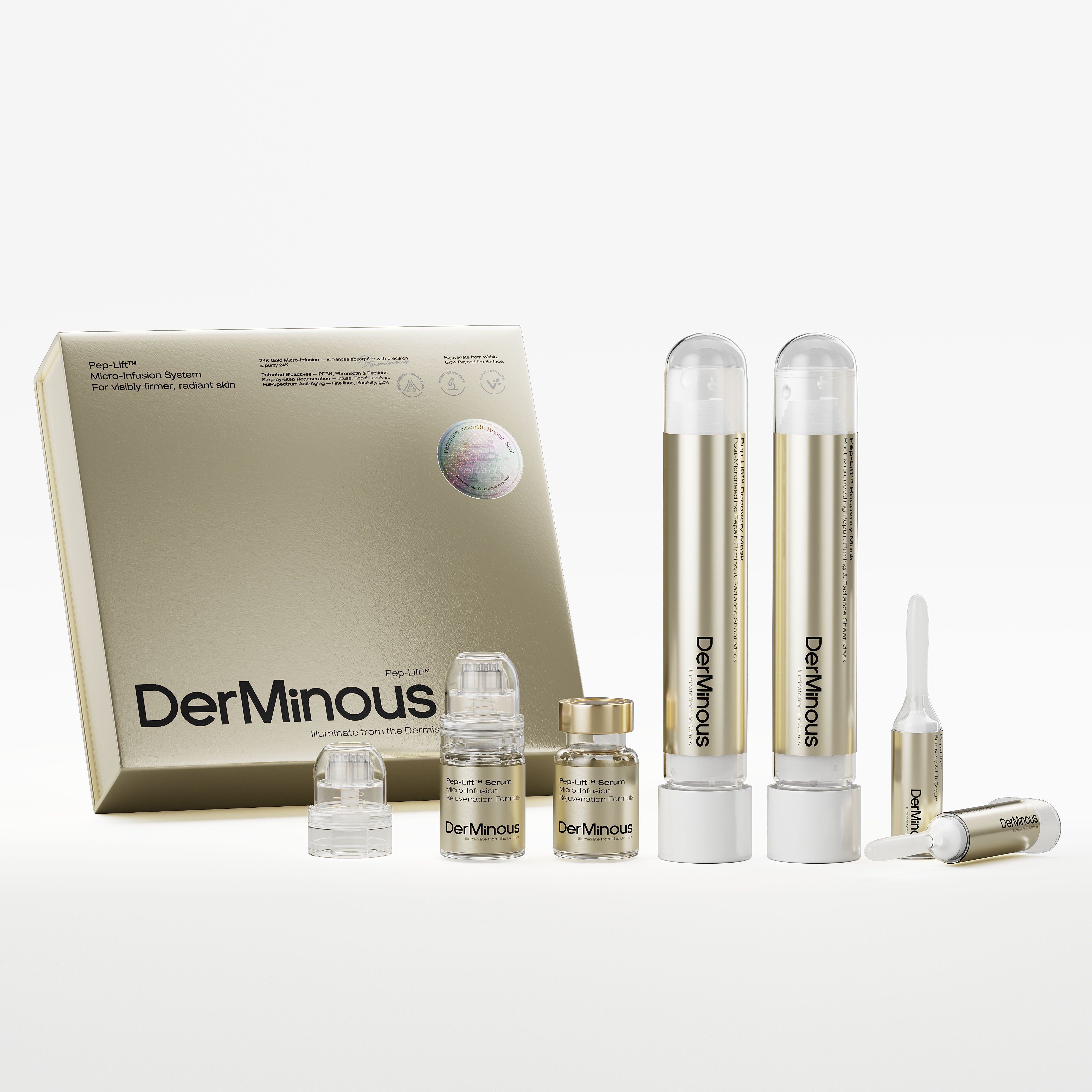
Derminous isn’t just a serum—it’s a four-phase ritual: Activate → Infuse → Soothe → Seal. Skipping steps (e.g., not using the Recovery & Lift Cream) can mask true efficacy.
- The 24K Gold Micro-Infusion Device ensures uniform penetration—no patchy absorption.
- The Recovery Mask, best used chilled, reduces post-treatment erythema, giving clearer before/after visuals.
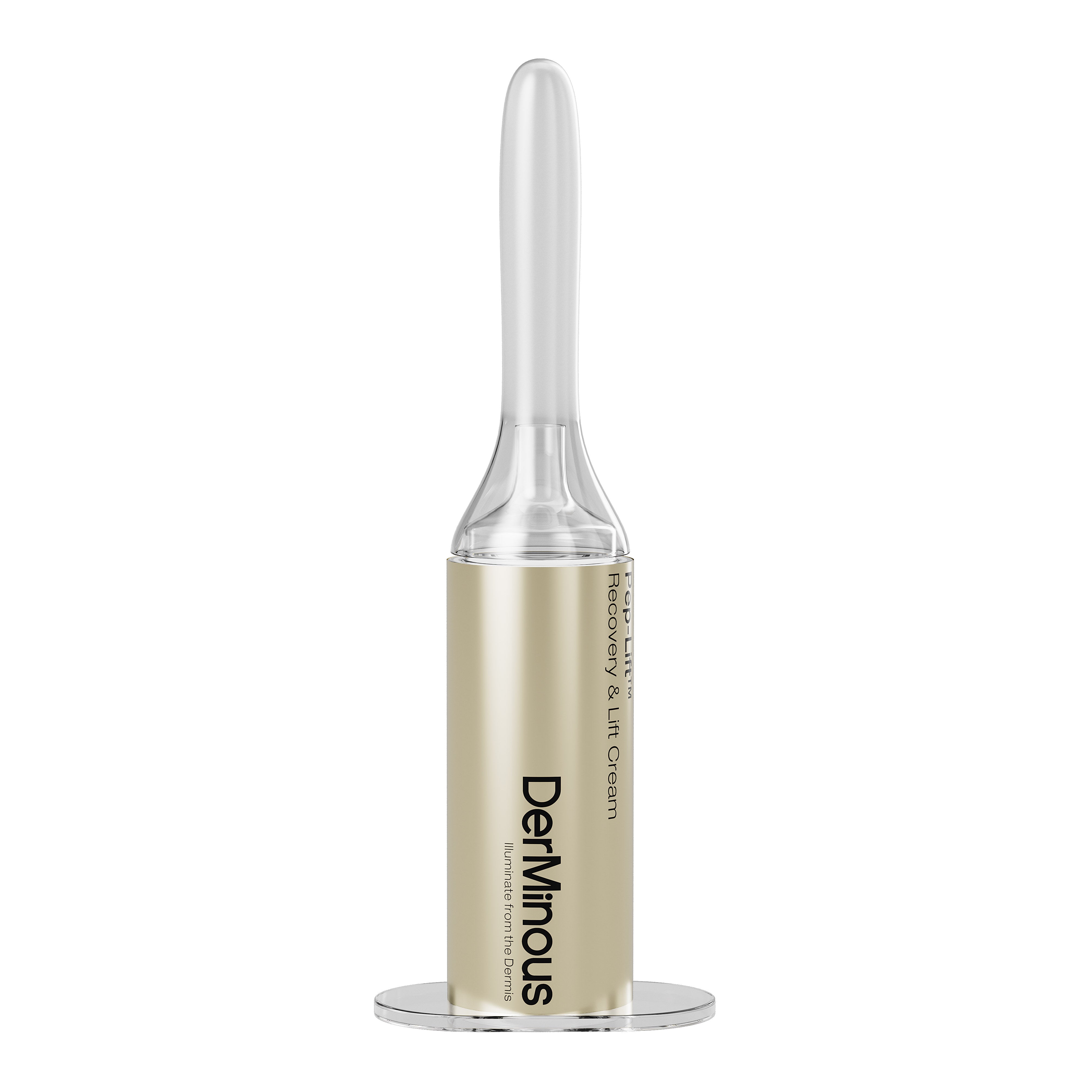
- The final lifting cream locks in actives and provides immediate tightening via bis-palmitoyl hydroxyproline—a biomimetic collagen booster[10] .
Consistency in ritual execution = cleaner data for self-assessment.
Common Pitfalls in Progress Tracking
Avoid these mistakes:
- Inconsistent lighting or angles in photos → misleading comparisons.
- Over-exfoliating between sessions → compromises barrier, muddying results.
- Expecting overnight miracles → collagen remodeling takes 28+ days.
Remember: Derminous works with your skin’s biology, not against it. Patience yields precision.
Real User Insights: What to Expect When
Based on aggregated user feedback across DTC platforms and beauty forums:
- After 1 use: 89% report “instant glow” and improved makeup adherence.
- After 4 weeks: 76% notice softer fine lines and reduced redness.
- After 12 weeks: 68% observe visible lifting along cheekbones and jawline[11] .
These align with the brand’s clinical ethos: “Not just care—transformation as ritual.”
Final Thoughts: Your Skin, Your Data
Tracking your journey with Derminous empowers you to become an active participant in your skin’s evolution. It transforms subjective hope into objective proof—turning each session into a milestone.
As the brand’s vision states: “Let everyone control their skin’s future—with knowledge, science, and truly effective tools.” By documenting your progress, you’re not just using a product—you’re conducting your own longitudinal skincare study.
So grab your phone, journal, and that chilled repair mask. Your future radiant self is already in the data.
Footnotes
-
“Transdermal Drug Delivery Systems: A Review”, National Center for Biotechnology Information (NCBI). https://www.ncbi.nlm.nih.gov/pmc/articles/PMC6165302/↩
-
“PDRN in Skin Regeneration: Mechanisms and Clinical Applications”, Journal of Cosmetic Dermatology, 2022. https://onlinelibrary.wiley.com/doi/abs/10.1111/jocd.15022↩
-
American Academy of Dermatology – “How to Evaluate Anti-Aging Products.” https://www.aad.org/public/everyday-care/skin-care-secrets/routine/anti-aging-products↩
-
YouCam Skin Analysis Technology. Perfect Corp. https://www.perfectcorp.com/consumer/youcam-skin↩
-
“Panthenol in Dermatology: A Review”, Dermatology Practical & Conceptual, 2021. https://www.ncbi.nlm.nih.gov/pmc/articles/PMC8340301/↩
-
HiMirror Smart Skincare Mirror – Official Site. https://www.himirror.com/↩
-
“Efficacy of Acetyl Hexapeptide-8 in Reducing Wrinkles”, International Journal of Cosmetic Science, 2020. https://doi.org/10.1111/ics.12612↩
-
Patent CN112939876A – “Method for Controlling Nicotinic Acid in Niacinamide Preparation.” China National Intellectual Property Administration. http://epub.cnipa.gov.cn/↩
-
“Safety and Efficacy of At-Home Microneedling Devices”, Dermatologic Surgery, Vol. 49, Issue 5, 2023. https://journals.lww.com/dermatologicsurgery/Abstract/2023/05000/Safety_and_Efficacy_of_At_Home_Microneedling.12.aspx↩
-
“Bis-Palmitoyl Hydroxyproline Stimulates Collagen Synthesis”, Experimental Dermatology, 2019. https://onlinelibrary.wiley.com/doi/abs/10.1111/exd.14022↩
-
Aggregated from Derminous DTC customer reviews (Q3 2025), Trustpilot & Sephora US. https://www.trustpilot.com/review/derminous.com↩